
Family law in Jackson Hole is decided in one courtroom, and I work in it.
Your divorce, custody, or support case will be decided by one district judge in one courtroom on East Simpson Avenue, and the decree she signs will govern your money and your children for years. Most cases settle first, on terms set by what that courtroom would do. I build cases for that courtroom. I was admitted in 1995, have tried more than seventy cases to the bench, and my office is two blocks from the court.
Call or text me. Clients get my cell number from day one, and I answer. Just been served? Here's what happens next.
Three things to know about family cases in Teton County.
Every contested family case in the county is decided by one district judge, Hon. Melissa M. Owens, on the bench since January 2022 after a practice that emphasized family law. Most cases settle, on terms shaped by what she would do.
Property is divided "as appears just and equitable" (W.S. § 20-2-114). Children are placed by their "best interests," against eleven listed factors (W.S. § 20-2-201). Child support follows a presumptive table (W.S. § 20-2-304). No alimony formula, no presumption of an equal split. What fills that latitude is evidence.
A month after the answer is due, each spouse owes the other a schedule of every account, asset, debt, retirement plan, and source of income (W.R.C.P. 26(a)(1.1)), and a sworn financial affidavit goes in before any support order. Hiding money here is not a strategy; it is a rule violation with a paper trail.
How a family case moves here.
The distance from complaint to decree is set by how much you disagree and how fast the money can be put on paper.
- Complaint and answer. The spouse who is served has twenty days to answer, thirty if served outside Wyoming. In Teton County, a restraining order keeping assets where they are and the children in the state is entered on request at the start, so it is often the first filing. The scheduling conference that follows is a phone call with the judge's assistant.
- Disclosures. A month after the answer is due the financial schedules change hands, then appraisals and, in a contested custody case, the guardian ad litem the court requires. This is where the months go, and where most cases are quietly won.
- Mediation. Nearly every contested case goes to mediation before trial; the court may order it and must when either spouse asks (W.R.C.P. 40(b)). It works best after the disclosures are complete and the valuations are in hand.
- Decree. Agreed cases finish on paper a few weeks past the statute's twenty-day minimum, often without a hearing. What is not agreed is tried to the judge alone; there are no juries in Wyoming family cases (W.R.C.P. 38(a)). Many motions along the way are decided on the papers, without a hearing, which is why the writing matters.
Teton County
District Court, Ninth Judicial District. Hon. Melissa M. Owens, district judge; Anne C. Sutton, Clerk of District Court. The courtroom is equipped for video appearances. Where court sits now, and how the courtroom runs.
250 E Simpson Ave, Jackson (temporary quarters since February 2026) · PO Box 4460, Jackson, WY 83001 · 307-733-2533
A new Justice Center is planned for the former courthouse site at 180 S King St
Elsewhere in Wyoming
Same statutes, different courthouse. Sublette County's district court sits in Pinedale, also in the Ninth District; Lincoln County's in Kemmerer, in the Third. I am admitted throughout Wyoming and take family cases in the neighboring counties regularly, elsewhere by arrangement.
Sublette County District Court, Pinedale · Lincoln County District Court, Kemmerer
Settling from strength.
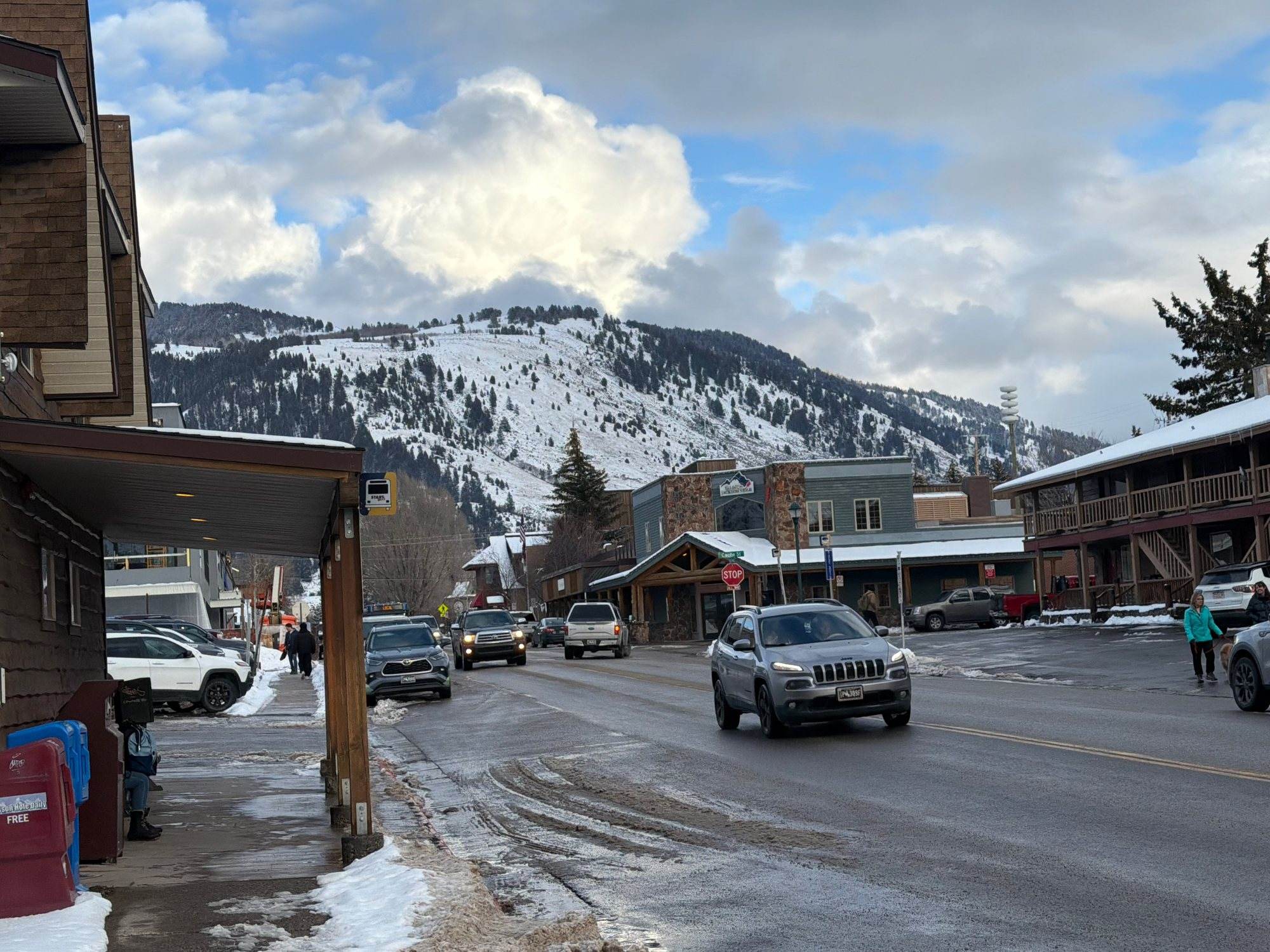
Jackson Hole is a small town with an unusual balance sheet: owners of the businesses on the square and the ranches up the valley, wealth that sits in a company or a fund somewhere else, professionals with an ordinary income and an extraordinary mortgage, seasonal workers on the ski calendar, and a remarkable number of people married to someone who lives in another state. Each of those facts changes where the case can be filed, what the court can reach, and how support is calculated. The decree will be enforced by this court for years, so I build cases for this court.
Almost everyone who walks into my office wants to settle, and almost everyone should. The terms are decided by what each side believes would happen at trial, and a spouse who arrives at mediation with complete disclosures, a defensible valuation, a parenting proposal the court would sign, and a lawyer who has tried cases in that courtroom is negotiating from a different position than a spouse who arrives with a grievance. I do not escalate for its own sake. I prepare for trial early enough that nobody has to find out whether it was needed.
Asked at the first meeting.
Do I have to live in Wyoming to file here?
How long does a divorce take in Teton County?
Do we have to go to court?
My spouse lives in another state. Can I still use a Wyoming lawyer?
What does the consultation involve?
Do you handle cases outside Teton County?
 Tool · two minutesWyoming child support calculatorThe statute's table, gross to net, shared custody. Run it before anyone quotes you a number.
Run the calculator →
Tool · two minutesWyoming child support calculatorThe statute's table, gross to net, shared custody. Run it before anyone quotes you a number.
Run the calculator →
Start with a confidential conversation with Aaron Herzberg.
A consultation is a scheduled working session, in person in Jackson or by video, in which we go through your situation and I tell you what I would do. It is a paid working session, not a sales pitch. The fee is quoted when we schedule. Your note reaches me directly, my office runs the conflicts check and puts the meeting on my calendar, and you can call or text any time.
40 E Simpson Ave, Jackson, WY 83001 · by appointment · video consultations for out-of-state clients · info@puzzlegroup.com