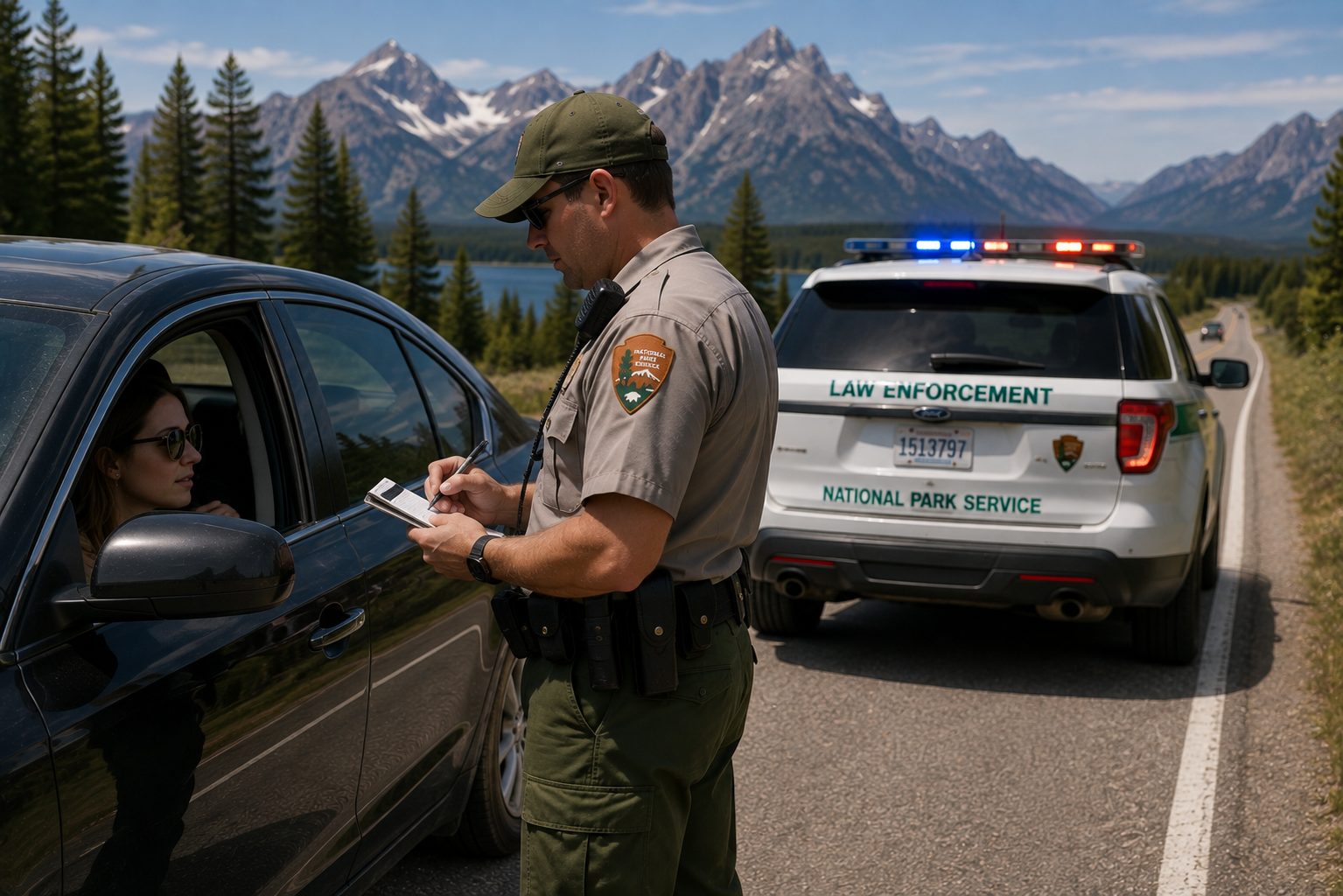
How to read your violation notice.
The paper a ranger hands you is a United States District Court Violation Notice, and the next three months are written on it: which court has the case, whether you must appear, how much the government would accept to close it by mail, and what paying does and does not do. This page reads it for you.
Call or text me. Clients get my cell number from day one, and I answer. Got a violation notice? Here's what happens next.
Read it in your language. Talk it through in your language.
Every page of this National Parks chapter is written in Chinese, Korean, Japanese, Spanish, French, German and Italian. The consultation is a video call with attorney Aaron Herzberg, carried in your language by live translation software, at no additional charge.

Three things about the form.
Federal violation notices are a national form processed by a national office, the Central Violations Bureau, on behalf of every district court. The form is generic; the court, the prosecutor, and the schedule of what can be paid belong to the District of Wyoming.
The ranger transmits the notice; the Bureau receives it usually within thirty days and occasionally not for six weeks. You do not need to wait for entry to pay, but there is no reason to hurry, and every reason to use the time.
If the notice printed a court date, that date controls. If not, the Bureau mails a Notice to Appear four to eight weeks after the citation, and the date in that letter is the deadline for paying a Box B notice or the hearing date for a Box A notice.
The notice, and the two boxes.
Seven parts, and what each one decides. The lookup page lists every section with its amount and its box.
Box A: appearance required
Box A means the offense is on the court's mandatory-appearance list, or the ranger chose to require an appearance, and the Bureau will not accept a payment to close it. A Box A notice is a criminal case that will be called in court; the question is who appears, and how.
Box B: pay, or appear
Box B means the regulation is on the collateral schedule and the government will take a fixed sum in lieu of your appearance. What paying does do is close the case, including any chance of a dismissal, and it leaves a citation you may still have to disclose on forms that ask about citations. What happens if you just pay goes through it.
- 01I enter an appearance and get the government's file: the ranger's report, the probable-cause statement, any video
- 02For a client out of state, I ask the court in writing for permission to proceed without them
- 03I propose a disposition to the Assistant U.S. Attorney before the hearing date: dismissal, an amended charge, a deferred resolution, or a fine without a conviction where the rules allow it
- 04If the government's version does not survive its own evidence, the case is set for a bench trial
- 05The outcome is entered by the court; the Bureau closes the notice; nothing further arrives in the mail
Available for Box A and Box B notices alike. Whether your presence can be excused is decided by the judge in each case.
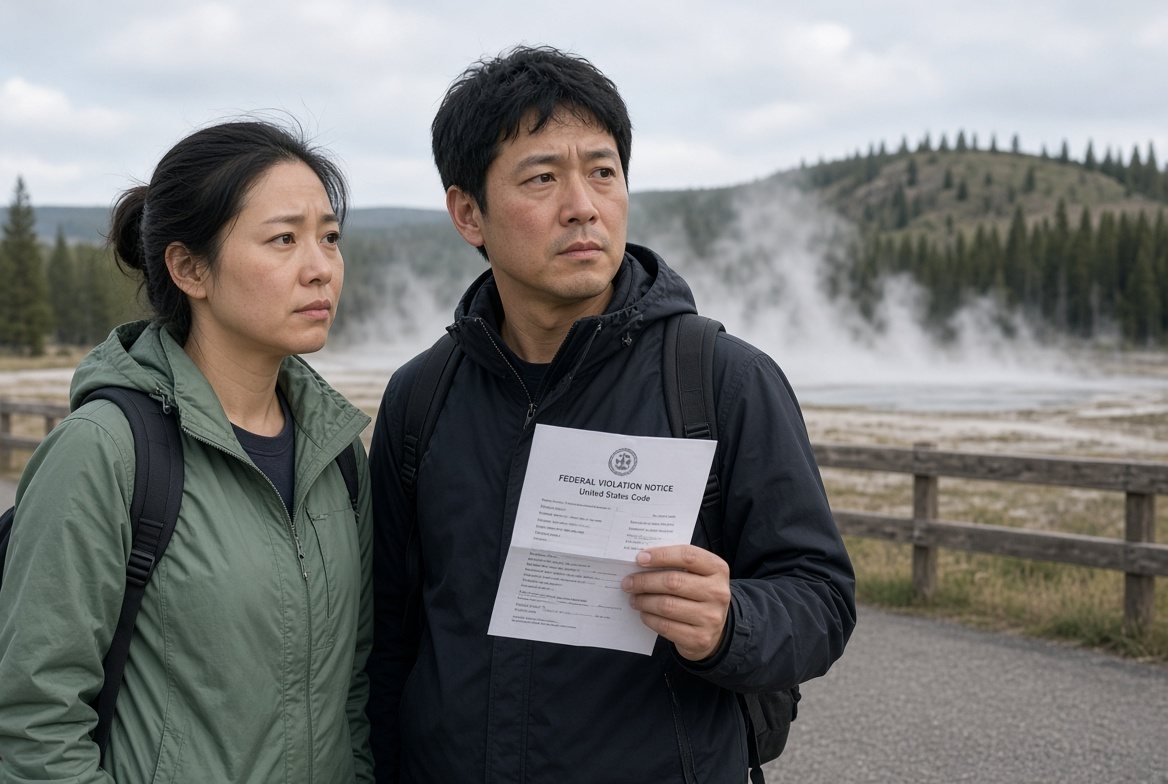
What paying is, and the weeks after.
Which offenses are which, the rule on paying, the calendar, the first week
Which offenses are which
In Wyoming's parks the mandatory list includes driving under the influence and refusing the breath test, foot travel in a thermal area, feeding or touching wildlife, off-road driving that goes more than a hundred feet or causes damage, any controlled substance other than a small amount of marijuana, commercial activity without a permit, speeding thirty or more over the limit, and the more serious drone, closure, interference, and vandalism cases. Speeding under thirty over, open container, careless driving, a minor marijuana notice, a leash violation, a campfire in the wrong place, and short off-road excursions are Box B offenses. The lookup page gives the amount and the box for every section.
What paying is in this court
Paying is convenient, and in this court it is not a conviction: under the 2026 rule of the United States District Court for the District of Wyoming, the federal court for Yellowstone National Park and Grand Teton National Park, a paid collateral forfeiture is "a resolution of the case without an admission of liability or an adjudication of guilt," it is not a fine, and a paid traffic notice is not reported to your state (L.Cr.R. 58.2(c)(5)). The Bureau's payment page carries a national warning that paying "may be admitting to a criminal offense"; that language is written for every federal court and does not describe this one. The forfeiture amount, plus a processing fee, is printed as the total collateral due.
The weeks after the stop
Until the Bureau enters the ticket it does not exist in the system, which is why a call to the Bureau in the first fortnight produces a shrug. If the notice printed a court date, payments must be received on or before it. The Notice to Appear goes to the address on the notice; people who move, travel, or gave the ranger a temporary address miss that letter, and missing it is treated as ignoring it. The Bureau's remedy for ignoring a notice is a summons or an arrest warrant from the District of Wyoming, and, for driving offenses, a report to the state that issued your license.
Court, when it comes, is a hearing before the magistrate judge at Mammoth Hot Springs or at the court's sessions in Jackson. At that hearing you can plead, request a trial date, or, with the court's consent, be represented without being present. By then, in a case I am handling, the disposition has usually been negotiated and the hearing is where it is entered.
Before you do anything
Photograph the notice, front and back. Write down what the ranger said, what you said, who was in the car or on the trail, and the time, while it is fresh; if there was a breath test, note the number you were told. Save any video, yours or anyone's. Do not call the prosecutor to explain, and do not post about it. Then find the regulation on the notice and look it up, because the charge is what the section says, and half of the questions people bring me are answered by that sentence.
About the notice itself.
My notice has no court date on it. Did the ranger forget?
Neither box is checked. Is the ticket valid?
The ticket is not in the system yet. Should I wait?
What happens if I ignore it?
Can I ask for traffic school, community service, or a deferred resolution?
Is the website I found to pay my ticket the real one?
Find your citation.
Every page below is written for one kind of notice. Start with the one that matches yours.
Start with a confidential conversation with Aaron Herzberg.
National-park matters begin with a thirty-minute call, and almost everything after that can be handled from wherever you are. Book it through the chat button in the corner of this page, or send the note here and my office will call you, usually the same business day. Have your violation notice in hand so we can read the box together, and call or text any time. Video consultations are available in Chinese, Korean, Japanese, Spanish, French, German and Italian, with live translation software, on request.
40 E Simpson Ave, Jackson, WY 83001 · by appointment · video consultations for out-of-state clients · info@puzzlegroup.com