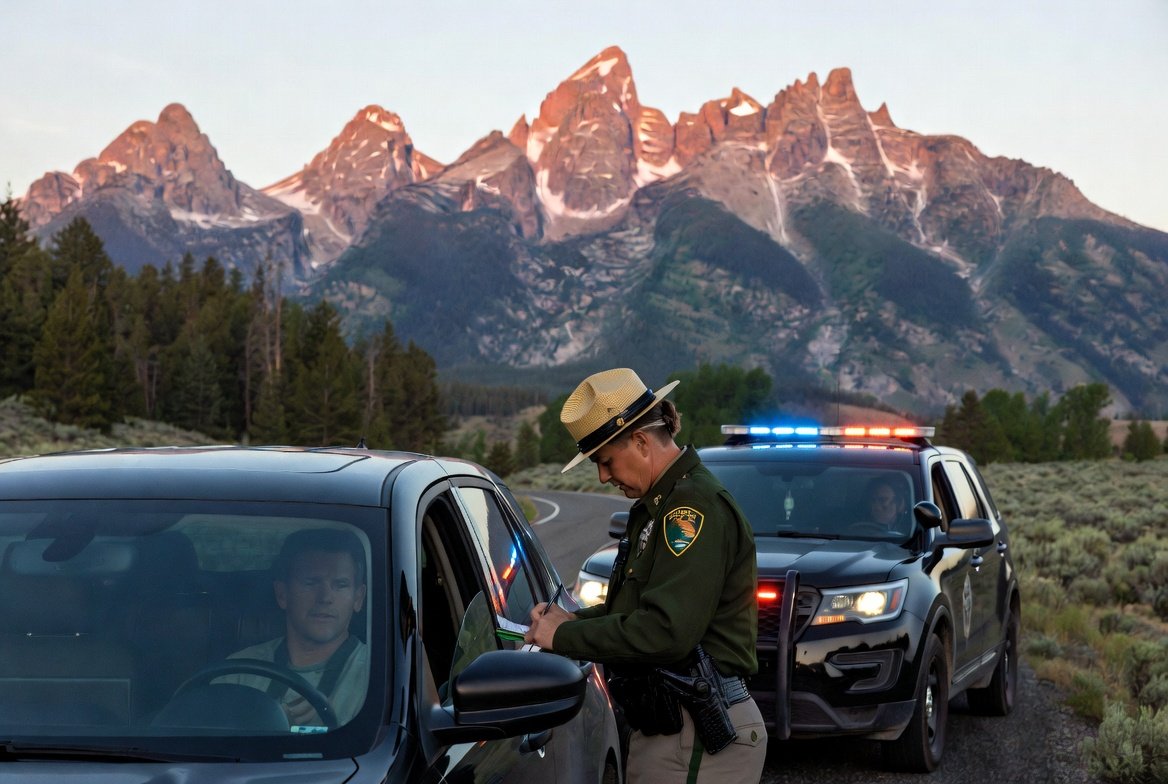
Cited or arrested in Yellowstone or Grand Teton National Park.
A ranger's ticket in either park is a federal charge, heard by a United States Magistrate Judge, not a county court, and most people who get one are home in another state by the time it matters. My job is to make sure it ends as a forfeiture, not a conviction: no plea, no finding of guilt, nothing sent to your state. I handle these cases from Jackson and at the Yellowstone Justice Center at Mammoth Hot Springs, and most clients never come back to Wyoming.
Call or text me. Clients get my cell number from day one, and I answer. Got a violation notice? Here's what happens next.
Read it in your language. Talk it through in your language.
Every page of this National Parks chapter is written in Chinese, Korean, Japanese, Spanish, French, German and Italian. The consultation is a video call with attorney Aaron Herzberg, carried in your language by live translation software, at no additional charge.

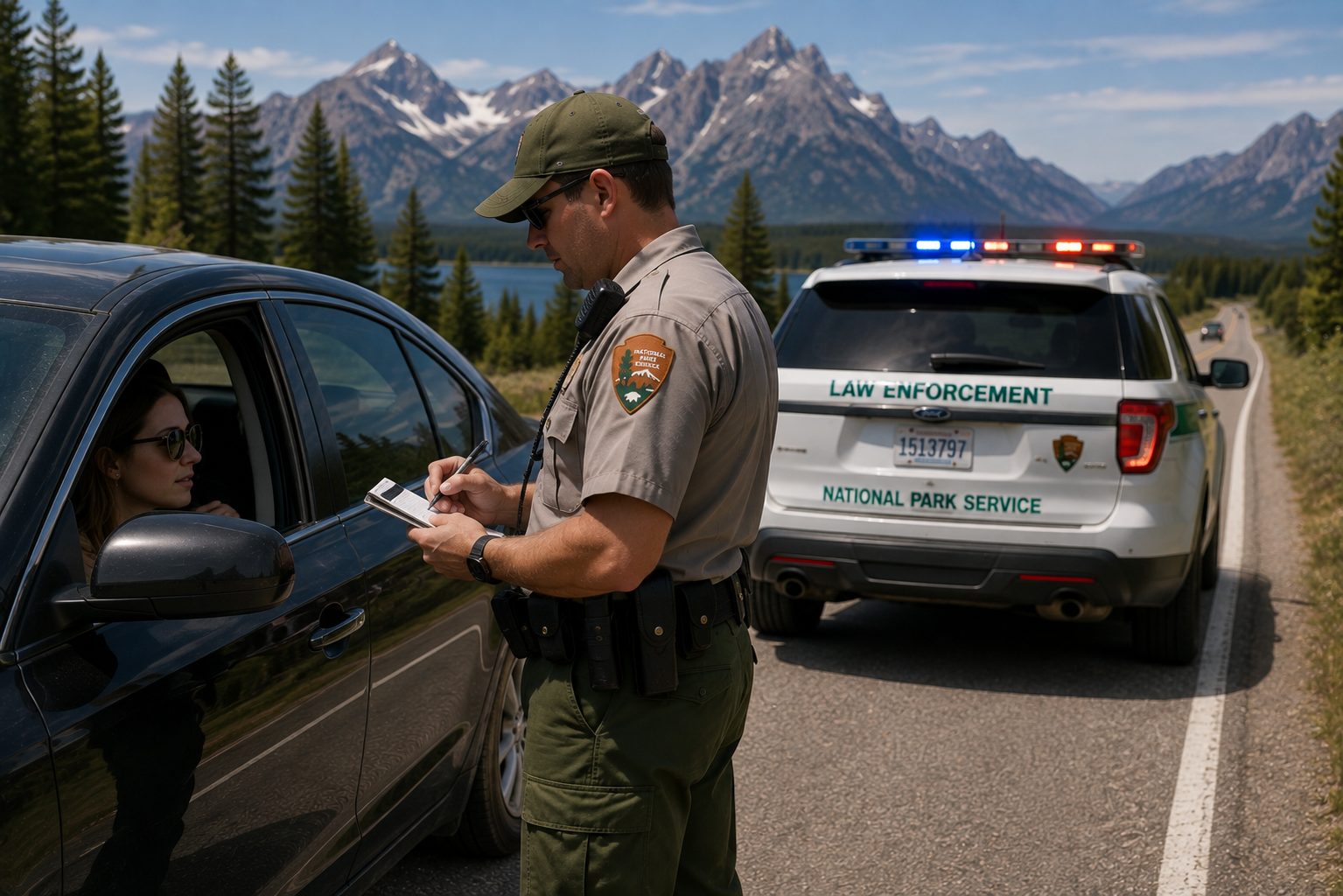
Three things that surprise people.
Both parks are federal land. The charge is a National Park Service regulation in Title 36 of the Code of Federal Regulations, heard by a U.S. Magistrate Judge. No county attorney, no municipal court, no traffic school.
Most ordinary park regulations carry the same maximum, six months and a $5,000 fine: a Class B misdemeanor, tried to the judge without a jury. Rarely imposed, but it is the class a background check, a visa officer, or a licensing board reads.
Box A or Box B is set by the court's schedule for that regulation, not by the ranger's mood, and it decides the first move: pay, or negotiate.
One district, two courtrooms.
Every case from both parks belongs to the same court, the United States District Court for the District of Wyoming, and is prosecuted by the U.S. Attorney's Office. A small number of people decide these cases and see the same regulations every week. Knowing what each charge usually resolves to in front of them is most of what you are hiring.
Yellowstone
Yellowstone Justice Center, Mammoth Hot Springs: a full-time U.S. Magistrate Judge, a courtroom built for video and telephone appearances, the U.S. Attorney and Park Service law enforcement in the same building.
105 Albright Avenue · Mammoth, WY 82190
Case numbers look like L:26-PO-00000-SAH
Grand Teton
Some Grand Teton proceedings are held before the U.S. Magistrate Judge in Jackson, although the court may conduct proceedings elsewhere in the district. Petty-offense trials, including ordinary Class B park offenses, are bench trials, not jury trials.
Jackson, Wyoming · minutes from my office at 40 E. Simpson Ave.
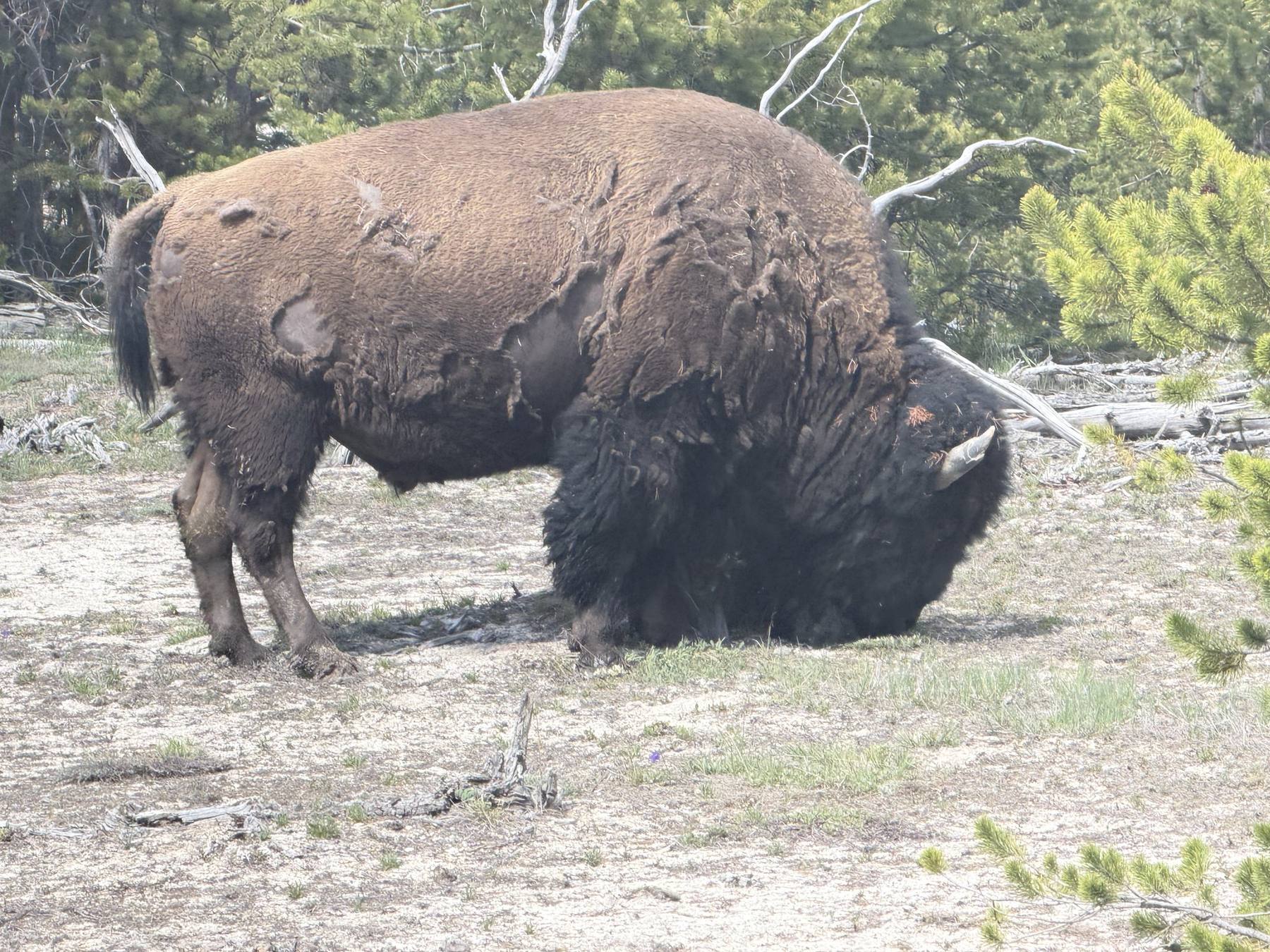
What your case will most likely end with.
For most park citations the realistic destination is a payment to the court and no conviction: no plea, no finding of guilt, no probation, no ban, and for a driving offense nothing reported to your state. On a Box B notice you reach it by paying. On a Box A notice it is negotiated, and in these two courts it is reached far more often than the headlines suggest.
Illustrative of resolutions commonly reached in these courts, not results in any particular case and not a prediction for yours. Every case turns on its own facts.
The extreme cases the U.S. Attorney publicizes, and the pay-by-mail schedule
The government publicizes the cases it wants visitors to hear about: the person who walked onto the cone of Old Faithful, the drunk driver who refused the test, the tourist who touched the bison. They are the outliers, chosen for deterrence, and they are the ceiling of what these courts do. Every one that says how it ended followed a guilty plea; none followed a trial. And nearly every one carries a fact that made it an outlier: a refused breath test, a second DUI within a year, a fence climbed into a closed area, 127 miles an hour.
| What happened | What the court did | Year |
|---|---|---|
| Walked about ten feet onto the cone of Old Faithful; pleaded guilty | 7 days in jail, plus costs | 2025 |
| Walked across several thermal features at the Mammoth terraces; pleaded guilty | 5 days in jail | 2026 |
| Climbed a fence into a closed area near Steamboat Geyser to take photographs | 7 days, $1,500, 2 years' unsupervised release, 2-year ban | 2024 |
| Intentionally disturbed a bison while intoxicated; pleaded guilty to three charges | 10 days, $3,450, 2 years' probation with a ban | 2024 |
| DUI with refusal of the breath test, three visitors in one week; all pleaded guilty | 7 days each, $800 to $1,650, 2 to 3 years' probation with bans | 2025 |
| 127 mph in a 45 zone in Grand Teton, killed an elk, left the park; pleaded guilty | 3 days, $1,000 in fines, $750 community-service payment | 2024 |
Sentences announced by the U.S. Attorney's Office for the District of Wyoming, 2024–2026. Costs and special assessments omitted. Not predictions for your case.
The pay-by-mail schedule is the second public list: what the court accepts to close a Box B notice by mail. Speeding is $10 for every mile over, with thirty or more over a mandatory appearance. Careless driving is $250. Open container in a vehicle is $100. A minor marijuana notice is $400; any other controlled substance is a mandatory appearance. Foot travel in a thermal area, feeding or touching wildlife, and DUI or refusing the breath test cannot be paid at all. The lookup page lists every section with its amount.
How I handle a park case.
The first week decides most of it.
- The notice. The location code, the violation number, and whether the case has reached the Central Violations Bureau.
- The prosecutor, early. I contact the Assistant U.S. Attorney who has the case before anyone has taken a position. If your presence can be excused, I ask the court for that in writing.
- The work. What the ranger saw, what the report says, what the regulation actually requires, and which ending protects the thing you care about: a clean record, a visa, a clearance, a commercial license, or never thinking about Wyoming again.
- The ending. Most cases end in an agreement. The ones that should be tried are tried to the bench, and I have been doing that for thirty years.
What people ask on the first call.
Do I have to come back to Wyoming for court?
Can I just pay the ticket and be done with it?
Is a national park citation a criminal record?
I am not a U.S. citizen. Does that change anything?
How long does a park case take?
Find your citation.
Every page below is written for one kind of notice. Start with the one that matches yours.
Start with a confidential conversation with Aaron Herzberg.
National-park matters begin with a thirty-minute call, and almost everything after that can be handled from wherever you are. Book it through the chat button in the corner of this page, or send the note here and my office will call you, usually the same business day. Have your violation notice in hand so we can read the box together, and call or text any time. Video consultations are available in Chinese, Korean, Japanese, Spanish, French, German and Italian, with live translation software, on request.
40 E Simpson Ave, Jackson, WY 83001 · by appointment · video consultations for out-of-state clients · info@puzzlegroup.com