
Relocation after a Wyoming custody order.
A parent who wants to leave Jackson with the children, and a parent who wants them to stay, are asking the court the same question from opposite sides. Wyoming answers it in two steps: whether the move is a material change in circumstances since the order, then whether the children are better served going or staying. The order requires thirty days' notice. The case requires a plan for the years after the move, written down before anyone packs.
Call or text me. Clients get my cell number from day one, and I answer. Just been served? Here's what happens next.
Three things the statute settles.
Every custody order must require a parent who "plans to change their home city or state of residence" to give written notice thirty days before the move, to the other parent and to the clerk of district court, "stating the date and destination of the move" (W.S. § 20-2-202(a)(iii)). Notice is a condition of moving, not a request for consent.
The court may modify custody or visitation only on "a material change in circumstances since the entry of the order" and a finding that the change serves the children (W.S. § 20-2-204(c)). Geographic distance between the parents' homes is one of the statute's own best-interests factors (W.S. § 20-2-201(a)(viii)).
The order must "provide for the allocation of the costs of transporting each child for purposes of visitation" (W.S. § 20-2-202(a)(ii)), and the cost of that transportation is a listed reason to deviate from presumptive child support (W.S. § 20-2-307(b)(vii)). Airfare is part of the case, not an afterthought.
How the court decides.
The move as a change
For years Wyoming treated a custodial parent's move as something the court could not hold against her, because every adult may live where she chooses. That is still true of the adult. Since 2012 the Supreme Court has recognized that a relocation, with the distance it creates and what that distance does to the other parent's time, can be the material change that lets a court reopen custody. It is not automatic. A move from Rafter J to Victor adds a pass in winter; a move to Phoenix ends the Wednesday overnights and turns every other weekend into a plane ticket. The farther the move and the younger the children, the more likely the first step is met. The modification page covers that first step in general; my post on relocation cases walks through how courts weigh the move itself.
The reasons, on both sides
The second step is the same eleven factors that decided the original order, applied to two futures: the children in the new place with one parent, or in Jackson with the other. The relocating parent's reasons matter because they predict the children's life there. A job, a partner, family nearby, a house the parent can own instead of rent, a school a child needs: those are reasons the court can weigh. A move whose main effect is distance from the other parent is weighed the other way, and the statute's seventh factor, each parent's willingness to let the other parent in, is where that argument lands. The parent who stays has a case to make too. If he has been at every exchange, every game and every conference, the record shows it, and the move has to answer for what it takes from the children.
- 01Written notice thirty days before the move, to the other parent and the clerk, with the date and destination (§ 20-2-202(a)(iii))
- 02The petition: to modify custody if you are moving, or to modify and keep the children here if you are not, with a certified copy of the order attached
- 03On request, a temporary order keeping the children in Wyoming until the court rules; an ex parte order requires a call to the judicial assistant
- 04Rule 26 disclosures, a scheduling conference, and mediation if either parent asks for it
- 05A guardian ad litem, required here whenever custody is contested at a hearing; home visits, teachers, providers
- 06The hearing: the material change proved first, then the eleven factors applied to both futures
- 07A new order with a long-distance schedule, travel costs allocated, and support adjusted to the new overnights
The usual sequence. A move planned around a school year should be filed the winter before; a petition filed in July for an August move is asking one judge to clear her calendar.
What a long-distance order has to say.
- The calendar. When the Wednesday overnight is gone, the time comes from somewhere else: most of the summer, alternating Thanksgivings and winter breaks, spring break, and long weekends the far parent can reach, often by flying to the children rather than the reverse. The order has to say which weekends, who books, and what happens when a flight cancels. The parenting schedules page covers schedules by age.
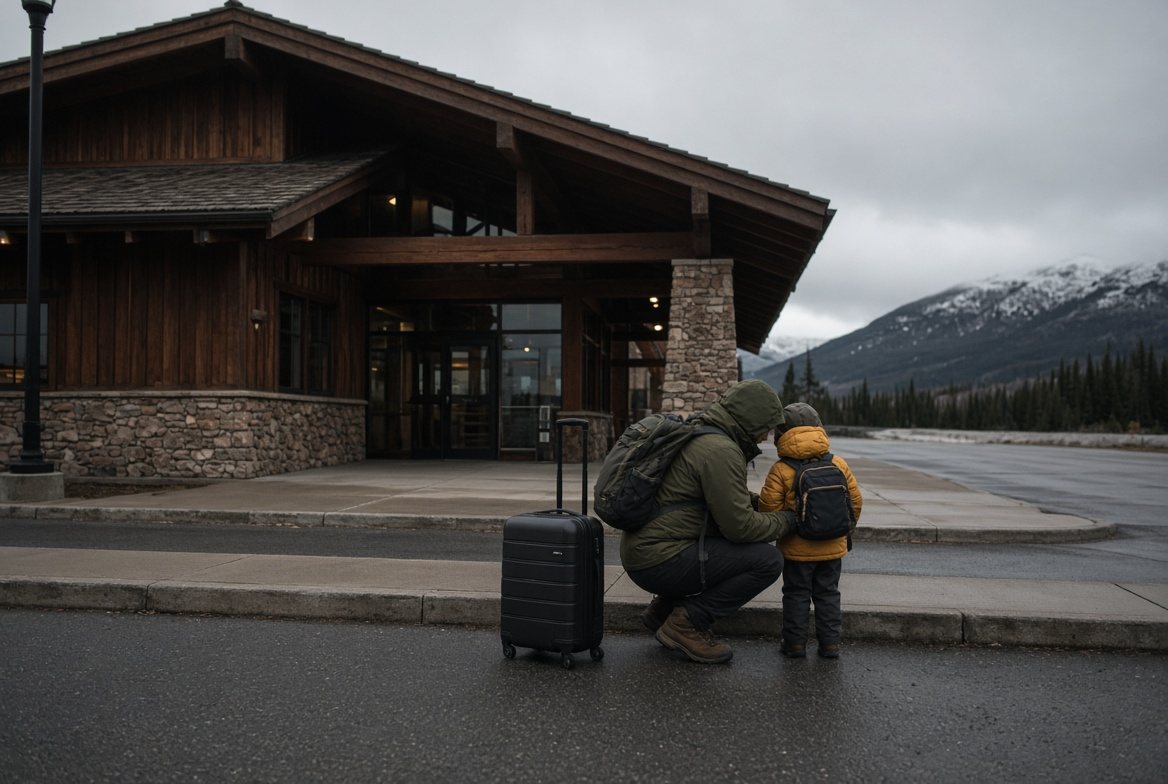
- The airport. Jackson Hole Airport is the only way out that does not involve a pass, and its schedule changes with the seasons; direct flights that exist in February and July may not exist in October. Airlines will not carry a young child alone, and older children fly as unaccompanied minors with a fee and a signed hand-off at each end. A workable order names the airports, the age at which the children fly alone, who meets them, and the alternative when weather closes the field.
- The money. Travel costs are allocated in the order, and the court may deviate from the presumptive support amount to account for them (W.S. § 20-2-307(b)(vii)). The parent who moved usually carries more of it. The new overnight count also changes the support calculation itself, so the support order is revisited in the same case under the separate standard on the support modification page.
- The rest of the relationship. Video calls at set times, access to school and medical records, which the statute already gives the noncustodial parent (W.S. § 20-2-201(e)), and a right of first refusal when the far parent is in town. "Well defined terms" is the statute's standard (W.S. § 20-2-201(d)), and a long-distance order that leaves these to goodwill comes back to court within two years.
The parent who stays, the temporary order, and two states.
Objecting to a move, keeping the children here while the court decides, agreed relocations, and what happens to the case after one parent leaves
If you are the parent who is not moving
The notice arrives and the clock is running. The first filing is a petition to modify custody asking that the children's primary home be with you, with a certified copy of the order attached (W.S. § 20-2-203(c)), and a motion for a temporary order that the children not be removed from the court's jurisdiction while it is heard. In Teton County that restraining order is entered on request, and an ex parte order requires a call to the judicial assistant, so the children can be kept here in days. The case you then build is a record of the life the children have in Jackson, the school, the sports, the grandparents, and your part in each of it, proved by people who have no side. The court is comparing two futures, and yours has to be the better one.
If you are the parent who is moving
Give the notice, on time, in writing, and file the petition yourself rather than waiting to be served. The petition should carry the whole plan: the job offer or the lease, the school and its calendar, who is there to help, and a proposed long-distance schedule in the detail the statute requires, with travel costs allocated and a support worksheet attached. A reason without a plan loses. Keep the existing schedule to the letter while the case is pending; the one thing worse than a weak reason for a move is a record of withheld visitation in the months before it.
Agreed moves
Parents who agree can file a stipulated modification with a proposed order and a new schedule; in an agreed case the court does not require proof of a material change, and the judge reviews the stipulation for the children's interests and signs it. A move made on a handshake leaves the old order in force: the parent who stayed can enforce the Wednesday overnight that no longer exists, and the parent who moved cannot enforce the summer that was promised. Write it down, attach the travel terms, and run the support numbers.
In Teton County
Every relocation case in the county is heard by the one district judge who entered or inherited the order. If custody is contested at the hearing she requires a guardian ad litem, who is expected to look at both homes, in a relocation case including the one that does not exist yet, and to speak with teachers, providers and people without a side. Children are interviewed in chambers, parents outside. Mediation is ordered if either parent asks, and a relocation case that settles usually settles on the schedule and the airfare rather than on the move itself. Hearings are held in the temporary courtrooms at 250 East Simpson Avenue; the courthouse page has the details. After the move, the court keeps "continuing subject matter jurisdiction to enforce or modify" the order (W.S. § 20-2-203(a)) while a parent remains in Wyoming, and the enforcement page covers what happens when a long-distance order is not honored.
What parents ask about moving.
Do I need the court's permission to move out of Wyoming with my children?
Can the other parent stop me from moving?
Is a move a "material change in circumstances" by itself?
What counts as a good reason to relocate?
Who pays for the children's travel after a relocation?
Does Wyoming keep the case after one of us moves?
 Tool · two minutesWyoming child support calculatorThe statute's table, gross to net, shared custody. Run it before anyone quotes you a number.
Run the calculator →
Tool · two minutesWyoming child support calculatorThe statute's table, gross to net, shared custody. Run it before anyone quotes you a number.
Run the calculator →
Start with a confidential conversation with Aaron Herzberg.
A consultation is a scheduled working session, in person in Jackson or by video, in which we go through your situation and I tell you what I would do. It is a paid working session, not a sales pitch. The fee is quoted when we schedule. Your note reaches me directly, my office runs the conflicts check and puts the meeting on my calendar, and you can call or text any time.
40 E Simpson Ave, Jackson, WY 83001 · by appointment · video consultations for out-of-state clients · info@puzzlegroup.com