
Keeping the house in a Jackson Hole divorce.
In most Teton County divorces the house is the estate. One spouse wants to stay, the other needs their share to start over, and the mortgage is in both names. Wyoming lets the court divide every asset as is just and equitable, but it cannot make a lender approve a loan. A buyout is a sequence: appraisal, equity, refinance, deed, payment. Miss a step and the house ends up sold anyway.
Call or text me. Clients get my cell number from day one, and I answer. Just been served? Here's what happens next.
Three things that decide who keeps the house.
Wyoming divides "the property of the parties as appears just and equitable," weighing each spouse's merits, the condition each is left in, who brought the property in, and the burdens on it (W.S. § 20-2-114(a)). A house one spouse owned before the wedding is a factor, not an exclusion. The property division page covers the standard.
The number the court divides is the appraised value less the mortgage, the line of credit, and, if a sale is realistic, the cost of selling. A house worth $2.4 million with a $900,000 mortgage is a $1.5 million question, and in this market the appraisal date matters as much as the appraiser.
The judge can award the house and order a deed. Only a refinance, or a lender's written release, takes the other spouse off the note. The court can enforce its property orders by injunction, attachment, or commitment (W.S. § 20-2-112(a)), but it cannot approve a loan. Every buyout is conditional on one.
How a buyout actually closes.
The sequence, and where it breaks
A buyout is five documents in order: an appraisal both sides accept, a decree or settlement agreement that fixes the equity and the share, a loan approval in the name of the spouse who stays, a deed from the spouse who leaves, and a payment to that spouse, in cash at closing or secured against the house. Most buyouts that fail break at the third step: the spouse who wants the house learns, after months of negotiating for it, that no lender will carry a Jackson mortgage on one income, or that the support they receive does not yet count as income. That is why I send clients to a lender before I negotiate for the house, and why the decree sets a deadline with a sale behind it.
The second place buyouts break is the deed. A spouse who signs a quitclaim before the money is secured has given away a house for a promise. The deed is delivered at the refinance closing, against the payment, or held in escrow until the note is paid. A payment over time is a promissory note secured by a recorded lien on the house, with a default clause that lets the spouse who left force a sale. Written that way, the arrangement survives a bad season.
- 01Appraisal by a licensed Teton County appraiser as of an agreed date, with both spouses given the report; a second appraisal only if the first cannot be lived with
- 02Equity: value less the mortgage balance, any line of credit, and, where a sale is likely, the cost of selling; the share each spouse holds under § 20-2-114
- 03A lender's pre-approval for the spouse who stays, on that spouse's income alone, before the house is traded for anything else
- 04A refinance deadline in the decree, usually ninety days to a year, with the house listed for sale if it passes and interim mortgage payments assigned
- 05The deed, delivered at the refinance closing against payment, or held in escrow; never signed in advance
- 06The equalization payment: cash from the loan, an offset against other property with the tax counted, or a promissory note secured by a recorded lien on the house
- 07Taxes and insurance: no gain on the transfer (26 U.S.C. § 1041), the § 121 exclusion planned for, homeowner's insurance and the HOA moved to one name
A stipulated decree that includes these terms is enforced by the court like any other order. A verbal agreement to "work out the house later" is not.
How the house usually leaves the marriage.
Patterns from Teton County decrees, not predictions for any case. Every division turns on the facts and on the court's judgment under W.S. § 20-2-114.
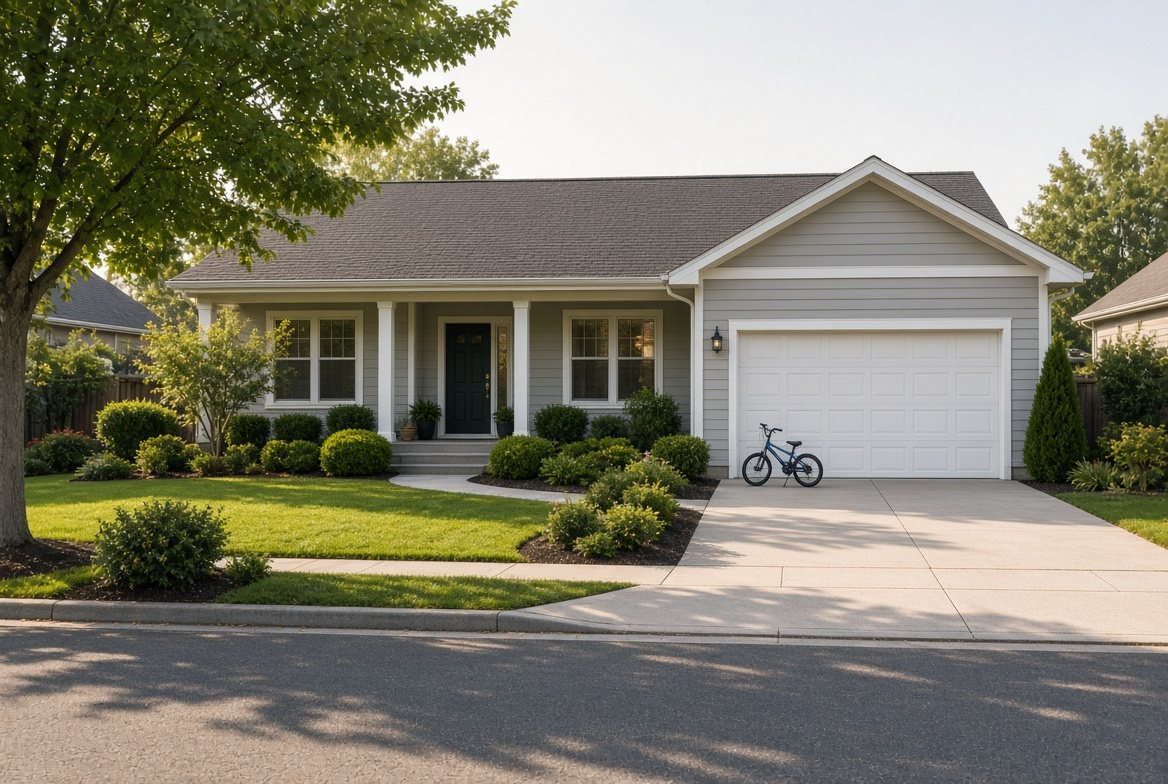
The appraisal, the restriction, the deferred sale, and Teton County.
Appraisal fights, deed-restricted and employee housing, holding the house for the children, selling, and the court
When the appraisers disagree
Jackson appraisals disagree for honest reasons. Comparable sales are scarce, a view of the Tetons or a stretch of Snake River frontage has no formula, and the market can move ten percent between separation and trial. The decree should fix the valuation date; the spouse who keeps the house wants it early, the spouse who leaves wants it late, and the court usually picks a date close to the hearing. A spouse who paid for a new roof after the separation should document it, because the court can credit it. A spouse who let the house deteriorate, or refused the appraiser entry, will find that weighed under "the respective merits of the parties." If two appraisals are far apart, the practical answer is a third appraiser both sides accept, or a listing, because the market is the one appraiser nobody can cross-examine.
Deed-restricted and employee housing
A large share of the families I represent live in housing that is not fully theirs to divide: a unit under a Jackson/Teton County Housing Department deed restriction, an employer-owned house that comes with a job at the resort, the hospital, or a ranch, or a lot held in a family trust. A deed restriction typically limits who may own the unit, ties ownership to local employment, and on some units caps the resale price; it survives the divorce, and the decree cannot waive it. If only one spouse qualifies, that spouse keeps the unit and the other receives an equalizing share of whatever equity the restriction allows. Employer housing is simpler and harsher: it goes with the job, and the spouse who does not hold the job has no claim to it beyond a reasonable time to move. Trust property is the separate property conversation, and often the high-net-worth one.
Holding the house for the children
Some decrees keep the house in both names for a period, usually until the youngest child finishes school, with one parent living there. It works when both spouses can wait for their money and follow written terms, and it fails when those terms are missing. The decree must say who pays the mortgage, taxes, insurance and repairs, whether those payments are credited at the sale, what happens if the resident spouse remarries or moves, and the date and price at which the house is listed. The spouse who moved out should understand that the mortgage stays on their credit and can block their own purchase. Where the parenting schedule depends on the children staying in one school, a deferred sale may be the right answer; it is never the easy one.
When selling is the only answer
Sometimes the arithmetic ends the conversation: a $1.6 million mortgage cannot be refinanced on a guide's income, a $700,000 equalization payment cannot come out of retirement accounts without a tax bill that swallows the equity, and the only way to divide the house is to sell it. A decree ordering a sale should name the listing agent, the listing price and how it is reduced, who lives in the house and pays for it until closing, how offers are accepted, and how proceeds are split after the mortgage and the costs. A spouse who refuses to sign the listing or the closing documents can be ordered to, and the clerk can sign in their place. The sale is also where the restraints matter: once a divorce is filed, the court will stop either spouse from encumbering or transferring the house to defeat the decree (W.S. § 20-2-109), and in Teton County that order is entered on request.
In Teton County
Every divorce in the county is before Judge Melissa M. Owens, the district's only judge. A temporary restraining order on assets, which keeps the house and its equity where they are during the case, is entered immediately on request; an ex parte order requires a call to her judicial assistant. The court requires mediation if either spouse asks, and the house is the term most often settled there, because a judge who orders a sale has given neither spouse what they wanted. Who lives in the house during the case is a temporary order question. A buyout paid from a retirement account needs a separate order and a tax calculation; a spouse who will not sign the deed after the decree is handled on the enforcement page. Hearings are in the temporary courtrooms at 250 East Simpson Avenue until the Justice Center opens (courthouse page).
What people ask about the house.
How is the house valued in a Wyoming divorce?
Can I keep the house if it was mine before we married?
What if I cannot refinance the mortgage into my own name?
How is the other spouse paid for their share?
Does keeping the house trigger taxes?
Can the court make us sell the house?
Start with a confidential conversation with Aaron Herzberg.
A consultation is a scheduled working session, in person in Jackson or by video, in which we go through your situation and I tell you what I would do. It is a paid working session, not a sales pitch. The fee is quoted when we schedule. Your note reaches me directly, my office runs the conflicts check and puts the meeting on my calendar, and you can call or text any time.
40 E Simpson Ave, Jackson, WY 83001 · by appointment · video consultations for out-of-state clients · info@puzzlegroup.com