Marijuana in Yellowstone and Grand Teton National Park.
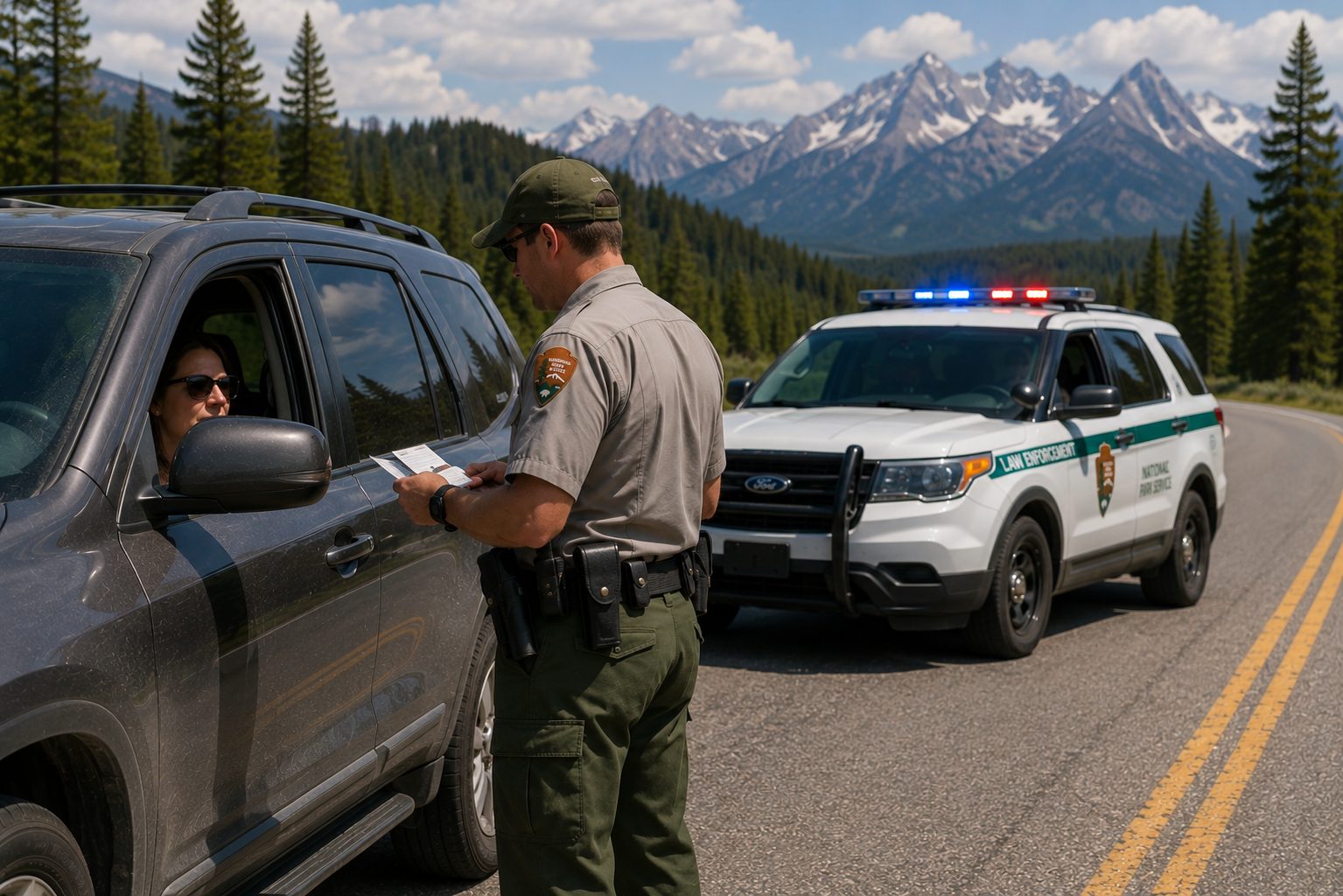
The most common way a law-abiding adult acquires a federal drug charge is to buy cannabis at a licensed store in Montana or Colorado and drive into a national park with it. The notice can be paid by mail for $400, which is the problem. Paid, it becomes a federal controlled-substance disposition with a longer reach than any speeding ticket.
Call or text me. Clients get my cell number from day one, and I answer. Got a violation notice? Here's what happens next.
Read it in your language. Talk it through in your language.
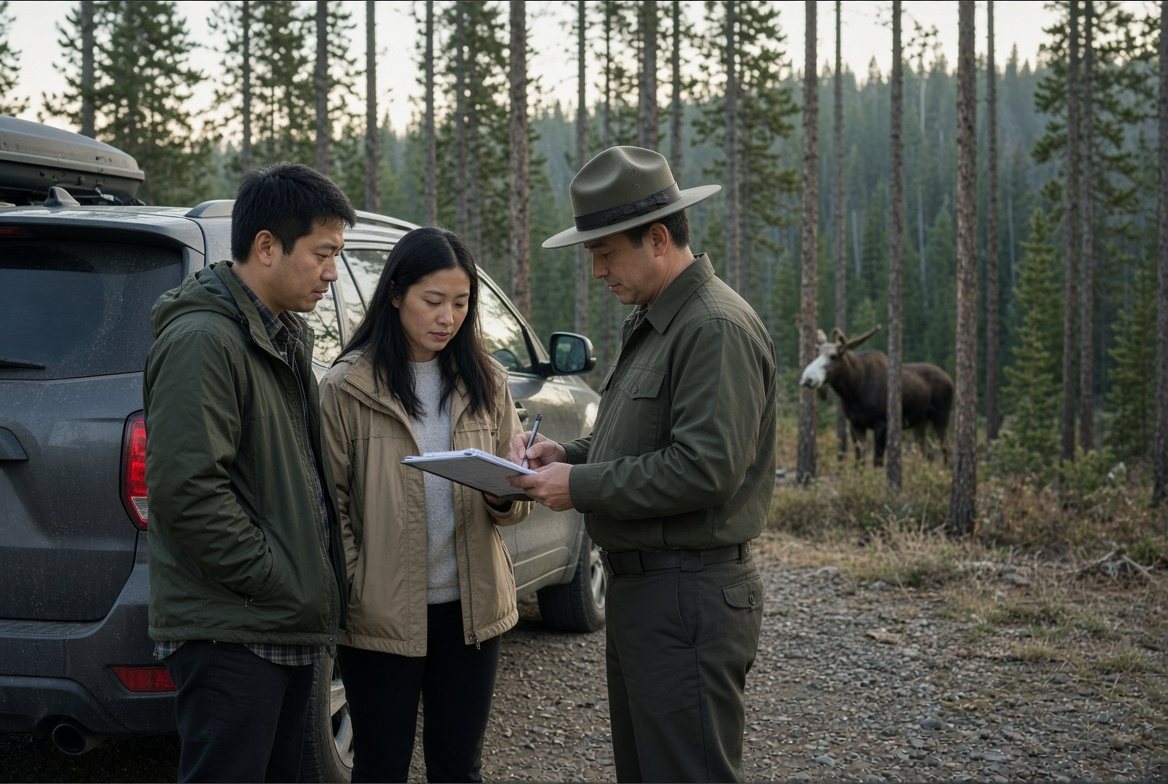
Every page of this National Parks chapter is written in Chinese, Korean, Japanese, Spanish, French, German and Italian. The consultation is a video call with attorney Aaron Herzberg, carried in your language by live translation software, at no additional charge.

The prohibition, and the one exception.
The Park Service regulation makes it an offense to possess a controlled substance anywhere in a park area (36 CFR § 2.35(b)(2)), and defines a controlled substance as anything on Schedules I through V of the federal act (36 CFR § 1.4).
Possession is excepted when the substance "was obtained by the possessor directly, or pursuant to a valid prescription or order, from a practitioner acting in the course of professional practice or otherwise allowed by Federal or State law." The exception is about provenance, not packaging.
Montana and Colorado permit adult purchase and possession under their own statutes. Those statutes stop at the park boundary, because possession inside the park is charged under a federal regulation, and because adult-use marijuana remains a Schedule I substance under the federal act.
Why the disposition is the case.
The immigration statute makes a conviction for, or an admission to, any offense "relating to a controlled substance" a ground of inadmissibility with no exception for a small amount, which is why visa holders and green-card applicants should not touch a notice without counsel. Security-clearance guidelines, professional licensing boards, and commercial background checks each apply their own definitions to a federal controlled-substance record, and the page on records walks through who sees what. Jail is not the realistic concern in a personal-amount case with no aggravating facts. The record is.
- 01Marijuana, minor possession (§ 2.35(b)(2)): $400 collateral, plus the $30 processing fee, if the ranger checks Box B
- 02Any other controlled substance (§ 2.35(b)(2)): mandatory appearance; no pay-by-mail option
- 03Delivery, including sharing (§ 2.35(b)(1)): mandatory appearance; no pay-by-mail option
- 04Under the influence in the park (§ 2.35(c)): $250 collateral
- 05Maximum on conviction, any of the above: six months and a $5,000 fine, plus the special assessment
Collateral amounts from the District of Wyoming's National Park Service collateral schedule. The collateral is what ends the case if you pay; it is not the sentence a court imposes, and it is not the measure of what the case can cost.
Dispensaries, medical cards, edibles, and pills.
Where the citations come from, hemp and edibles, the 2026 rescheduling, prescriptions, other substances
Where marijuana citations come from
The gateway towns on the Montana side of Yellowstone sell cannabis over the counter, and a great many visitors buy there on the way in without a thought about jurisdiction. From the south, Colorado product travels north through Jackson and into Grand Teton in the same glove box it left the dispensary in. Almost every marijuana notice in the parks starts as something else: a speeding stop on the highway through Grand Teton, a taillight on the Grand Loop, a wildlife jam that a ranger is clearing. The federal courts that cover Wyoming have long treated the smell of marijuana coming from a vehicle as enough to search it, and the ranger's report will describe the odor, the question, and the answer in that order. What was said in the first two minutes of the stop tends to decide whether the case is about possession or about something more.
The other source is a ranger on foot at dusk: a joint at a campsite, a pipe at a trailhead, a group at a lake shore. These are the cases that add a second charge, because a visitor who is visibly impaired near a river, a cliff, or a thermal feature can be cited for presence under the influence as well as possession, and a shared joint can be written as delivery for the person who passed it. The same section separately prohibits delivery, defined as any actual, attempted, or constructive transfer (§ 2.35(b)(1)), and being present in the park under the influence of alcohol or a controlled substance to a degree that may endanger oneself, another person, or park resources (§ 2.35(c)). Each is a petty offense with the same six-month, $5,000 ceiling as the rest of the regulations.
Edibles, vapes, and things labeled hemp
Federal law does not distinguish a gummy from a bud; a THC edible or a vape cartridge made from marijuana is marijuana, and a pen with residue is a possession case. Hemp-derived products occupy a shrinking legal space: hemp within the federal THC limit has been outside the controlled-substances act since 2018, but a law signed in November 2025 narrows the definition to total THC with a per-container cap and takes effect in November 2026, after which most of the intoxicating hemp gummies and vapes sold at gas stations count as marijuana. None of that is visible on the roadside. A ranger sees a product, seizes it, and a laboratory report weeks later decides what the case is.
Medical cards after the 2026 rescheduling
For years the answer to "I have a medical card" was short: a state card is not a federal prescription, marijuana could not be prescribed under federal law at all, and the park regulation did not care what the state had authorized. On April 28, 2026, the Drug Enforcement Administration changed part of that. Its rule moved marijuana in FDA-approved products and marijuana "subject to a state medical marijuana license" from Schedule I to Schedule III, while leaving every other form of marijuana, including everything sold for adult use, in Schedule I. The same rule treats a state medical certification, properly dated and signed, as sufficient for a federally registered dispensary to dispense.
What the rule does not do is mention patients, possession, or federal land. Whether product that left a licensed medical dispensary is still "subject to" that license in a patient's backpack, and whether a state certification is a "valid prescription or order from a practitioner" within the park regulation's exception, are questions the rule leaves open and the court at Mammoth has not, to my knowledge, answered. A broader proceeding on whether all marijuana belongs in Schedule III finished its hearings in July 2026 and awaits a decision. The practical position for a patient cited in the park is therefore new and unsettled, which is the opposite of a reason to pay the notice. Keep the certification and the receipt, decline to discuss either with the ranger, and bring both to the first conversation with counsel.
Prescription medication, and everything that is not marijuana
Stimulants, sedatives, sleep aids, and opioid pain medication are all controlled substances, and all of them are carried through the parks every day by people who are entitled to them. The regulation's exception covers medication obtained from a practitioner or on a valid prescription, and it does not require the original bottle. A citation for prescribed medication is usually a paperwork problem that the pharmacy's records solve. The exceptions are the ones you would expect: someone else's prescription, a spouse's medication packed by mistake, or a quantity that no prescription accounts for.
Psilocybin, MDMA, cocaine, LSD, and ketamine without a prescription are all "other substances" on the court's schedule, which means no pay-by-mail option and a required appearance before the magistrate judge. Quantity and packaging decide whether the government treats the case as personal possession under the regulation or reaches for the federal possession statute, which carries up to a year, and a search that turns up scales or multiple bags is a different case from a search that turns up a bag of mushrooms at a trailhead. Nothing on this page should be taken as a description of how those cases end; that depends on facts I have not heard yet.
The firearms form
The federal firearms purchase form asks whether the buyer is an unlawful user of marijuana and warns that state legalization does not change the answer; the Supreme Court held in June 2026 that a marijuana user cannot be prosecuted for possessing a gun on that ground alone (United States v. Hemani), but a false answer on the form remains its own federal offense. As in every park case, the object is to end the matter with a fine and without a conviction that has to be disclosed. Whether that is available in a possession case depends on the amount, the facts of the stop, your record, and the prosecutor's view of all three; it is never available to the person who paid the notice the week it arrived.
Asked about marijuana in the parks.
I bought it legally at a dispensary in Montana or Colorado. Is that a defense?
I have a medical marijuana card. Does that change anything?
The notice says I can pay $400. Should I just pay it?
It was a vape pen, or gummies, or something labeled CBD or hemp. Is that still marijuana?
My prescription pills were in a weekly organizer, not the pharmacy bottle. Am I in trouble?
We were sharing a joint at the campsite and the ranger wrote my friend up for "delivery." Is that real?
Find your citation.
Every page below is written for one kind of notice. Start with the one that matches yours.
Start with a confidential conversation with Aaron Herzberg.
National-park matters begin with a thirty-minute call, and almost everything after that can be handled from wherever you are. Book it through the chat button in the corner of this page, or send the note here and my office will call you, usually the same business day. Have your violation notice in hand so we can read the box together, and call or text any time. Video consultations are available in Chinese, Korean, Japanese, Spanish, French, German and Italian, with live translation software, on request.
40 E Simpson Ave, Jackson, WY 83001 · by appointment · video consultations for out-of-state clients · info@puzzlegroup.com