Open container and public intoxication in Yellowstone and Grand Teton.
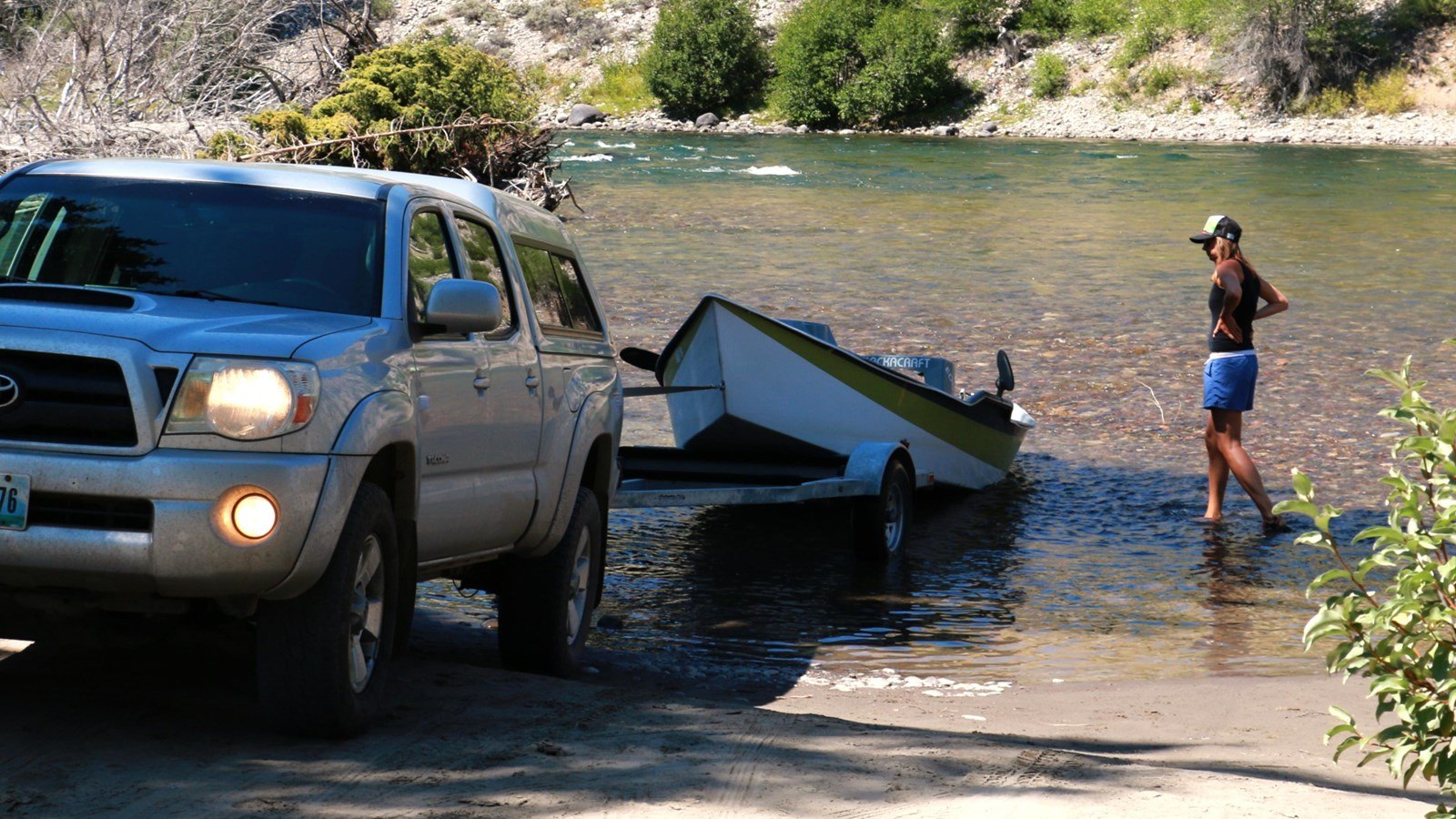
The open-container notice is the park ticket people are most surprised to receive and least likely to take seriously. A passenger with a beer, a recorked bottle from dinner on the back seat, a group at a boat ramp, a nineteen-year-old at a campground: each is a federal petty offense with $100 or $250 printed on the notice.
Call or text me. Clients get my cell number from day one, and I answer. Got a violation notice? Here's what happens next.
Read it in your language. Talk it through in your language.
Every page of this National Parks chapter is written in Chinese, Korean, Japanese, Spanish, French, German and Italian. The consultation is a video call with attorney Aaron Herzberg, carried in your language by live translation software, at no additional charge.

Three regulations, three different cases.
Carrying or storing "a bottle, can or other receptacle containing an alcoholic beverage that is open, or has been opened, or whose seal is broken or the contents of which have been partially removed" within a motor vehicle in a park is prohibited (36 CFR § 4.14(b)).
Possession of an alcoholic beverage by a person under twenty-one is prohibited "except where allowed by State law" (36 CFR § 2.35(a)(2)(ii)). Wyoming's statute allows a minor to drink in the physical presence of a parent, spouse, or guardian who is twenty-one or older.
It prohibits being present in a park while intoxicated by alcohol or a controlled substance "to a degree that may endanger oneself or another person, or damage property or park resources" (36 CFR § 2.35(c)). The element is risk, not disorder.
Who is responsible, and what it costs.
The exceptions
Each person in the car is responsible for what they are carrying; the driver is responsible for what is stored. The section excepts a container in the trunk or, in a vehicle without one, in the luggage area not readily reachable from the seats; a container in the living quarters of a motor home or camper; and a container in a vehicle parked at an authorized campsite where its occupants are camping. The glove box does not count as storage.
- 01Open container in a vehicle, § 4.14(b): $100
- 02Open container readily accessible, including the glove compartment, § 4.14(d): $100
- 03Possession of alcohol by a person under 21, § 2.35(a)(2)(ii): $100
- 04Alcohol in an area the superintendent has closed to it, § 2.35(a)(3)(iii): $100
- 05Presence under the influence to a degree that may endanger, § 2.35(c): $250
- 06Sale or gift of alcohol to a person under 21, § 2.35(a)(2)(i): mandatory appearance
- 07Operating a vessel under the influence, or refusing the test, §§ 3.10 and 3.11: mandatory appearance
District of Wyoming collateral fine schedule for the National Park Service, as amended April 2022; a processing fee is added to each. The amount on your notice controls. Paying it ends the case as a forfeiture, not a conviction and not a fine set by a judge; the federal court's 2026 rule says so in those words.
Boat ramps, campgrounds, and the hundred-dollar question.
Where the notices are written, boats, closed areas, under twenty-one, and why $100 is worth a call
Campgrounds and shorelines
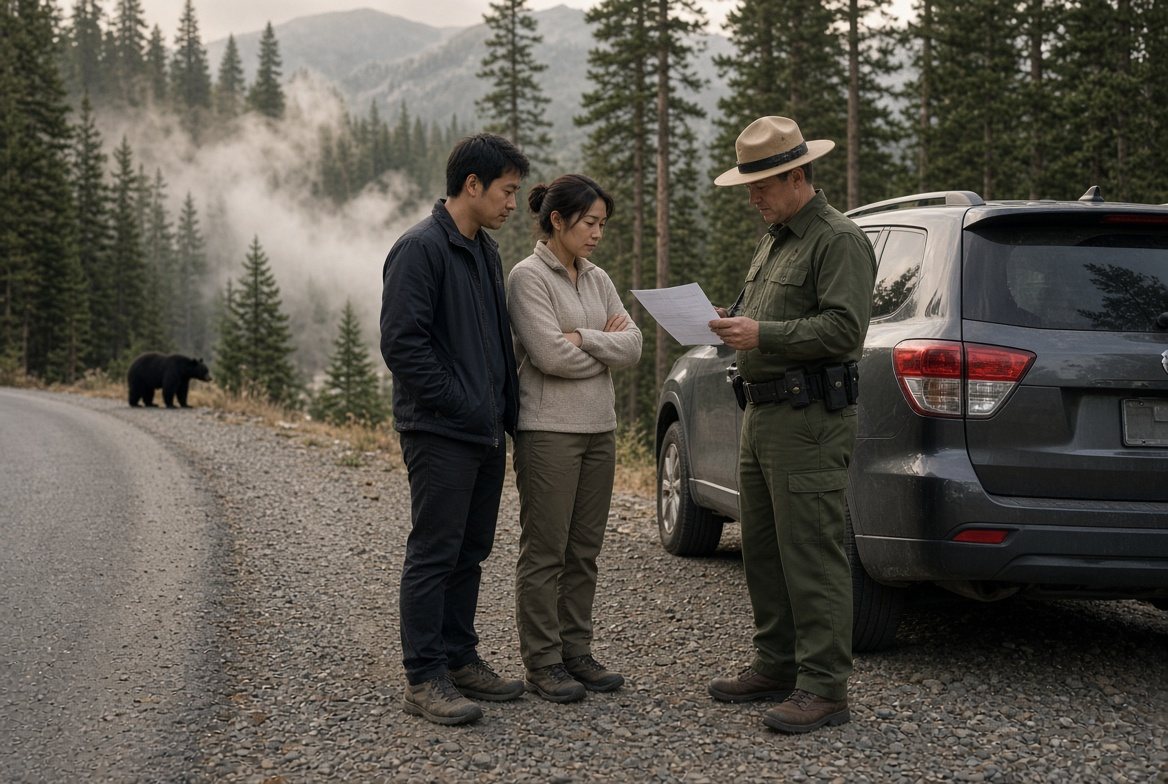
The under-the-influence notices tend to come from foot patrols at dusk: a campground loop at Gros Ventre or Madison, the shore at String Lake, the picnic area at Colter Bay, the boat ramp at Signal Mountain or Bridge Bay. The ranger's report will describe slurred speech, unsteady footing, and the thing that made it dangerous: the water, the drop, the animal, the road. A visitor weaving along a riverbank, standing at the edge of a thermal feature, or walking toward an elk with a drink in hand can be cited without having bothered anyone, and the notice reads worse than a noise complaint because it says "under the influence" on its face. In the cases the government announces, two other charges ride along. Disorderly conduct covers unreasonable noise and fighting, and the wildlife regulations cover the person who approached the bison because it seemed like a good idea at the time. In those announcements the under-the-influence count has been the smaller one; in one Yellowstone case it drew a $200 fine while the bison count drew ten days.
Boats and rafts
Part 3 of the regulations, which governs vessels, has no open-container section. What it has is § 3.10, which prohibits operating or being in actual physical control of a vessel while impaired to the point of being incapable of safe operation, or at 0.08 (36 CFR § 3.10), and § 3.11, which requires a test on probable cause and prohibits refusing one. A vessel is any watercraft, which takes in the raft on the Snake and the kayak on Jackson Lake, not only the powerboat. All three boating charges are mandatory appearances on the District of Wyoming schedule. Beer in a drift boat is not an offense; an impaired oarsman is.
Closed areas
Both superintendents have closed places to alcohol under the regulation's closure paragraph. In Yellowstone, every thermal area is closed to consumption and to open containers, as is the developed area just inside the North Entrance; in Grand Teton the closures cover the visitor centers and park offices. A closure notice is its own $100 line on the schedule, and the thermal-area version can arrive alongside a boardwalk charge that requires an appearance.
Under twenty-one: college trips, summer jobs, and the parents who call
The under-21 cases come in groups: a car of college students on the way to a trailhead, a tent site at Jenny Lake with a cooler, and the employee housing behind every lodge in both parks. The notice is $100 on the schedule, which is why it is paid so quickly and regretted so slowly. Paid, it is a forfeiture under a federal regulation for possession of alcohol by a minor, not a conviction, but a citation on the record at the beginning of a working life, and the page on records explains which applications and clearances will read it.
The adult in the group has a different problem. Whoever bought or handed over the alcohol can be cited under the sale-or-gift paragraph, which the court's schedule lists as a mandatory appearance; that person must appear, and their notice reads as furnishing alcohol to minors. A parent traveling with a nineteen-year-old has the Wyoming exception to think about, and it is worth thinking about carefully, because it turns on physical presence at the time, not on general permission. The realistic goal in these cases is the same as in every park case, a forfeiture, not a conviction, and on a Box B open-container notice paying by mail reaches it. What paying gives up is the dismissal, which is the ending the parents actually want, and which is not available to the student who paid the notice from the dorm.
Why a hundred-dollar notice is worth a phone call
The pay-by-mail amount is not a fine in the ordinary sense. It is collateral: a fixed sum the court accepts in lieu of your appearance to end the case, and under the 2026 rule of the United States District Court for the District of Wyoming, the federal court for Yellowstone National Park and Grand Teton National Park paying it is "a resolution of the case without an admission of liability or an adjudication of guilt," not a fine, and not reported to your state; the page on the notice walks through the form. It is still a citation under an alcohol regulation carrying a six-month maximum, and forms that ask whether you were ever cited will still be asking about it. A can of beer in the cupholder is not a jail case. The question is whether a person with a clearance, a license, a visa, a trusted-traveler card, or a pending job offer would rather answer "dismissed" than "paid," and that turns on the exact question their forms ask.
In Grand Teton, open-container notices have arrived with a letter offering a smaller amount online and a larger one in court; the Grand Teton page explains what each number is. The alternative to both is a lawyer entering the case and proposing a dismissal or an amended charge, which for an open-container, closure, or under-21 notice with no aggravating facts is a proposal these courts hear regularly. For a § 2.35(c) notice the conversation is longer, because "under the influence" is the phrase a background check reads, and because the count often arrives with company. Where the company is marijuana or another controlled substance, the page on drug charges takes over.
Asked about alcohol notices in the parks.
I was the passenger. Can I be cited for an open container?
The wine bottle was recorked and on the back seat. Is that really an open container?
We were drinking at our campsite, not driving. Why did we get a ticket?
My nineteen-year-old was cited for possession of alcohol. What happens now?
Can I drink on a raft on the Snake or a boat on Jackson Lake?
The notice says $100. Is that all it will cost?
Find your citation.
Every page below is written for one kind of notice. Start with the one that matches yours.
Start with a confidential conversation with Aaron Herzberg.
National-park matters begin with a thirty-minute call, and almost everything after that can be handled from wherever you are. Book it through the chat button in the corner of this page, or send the note here and my office will call you, usually the same business day. Have your violation notice in hand so we can read the box together, and call or text any time. Video consultations are available in Chinese, Korean, Japanese, Spanish, French, German and Italian, with live translation software, on request.
40 E Simpson Ave, Jackson, WY 83001 · by appointment · video consultations for out-of-state clients · info@puzzlegroup.com