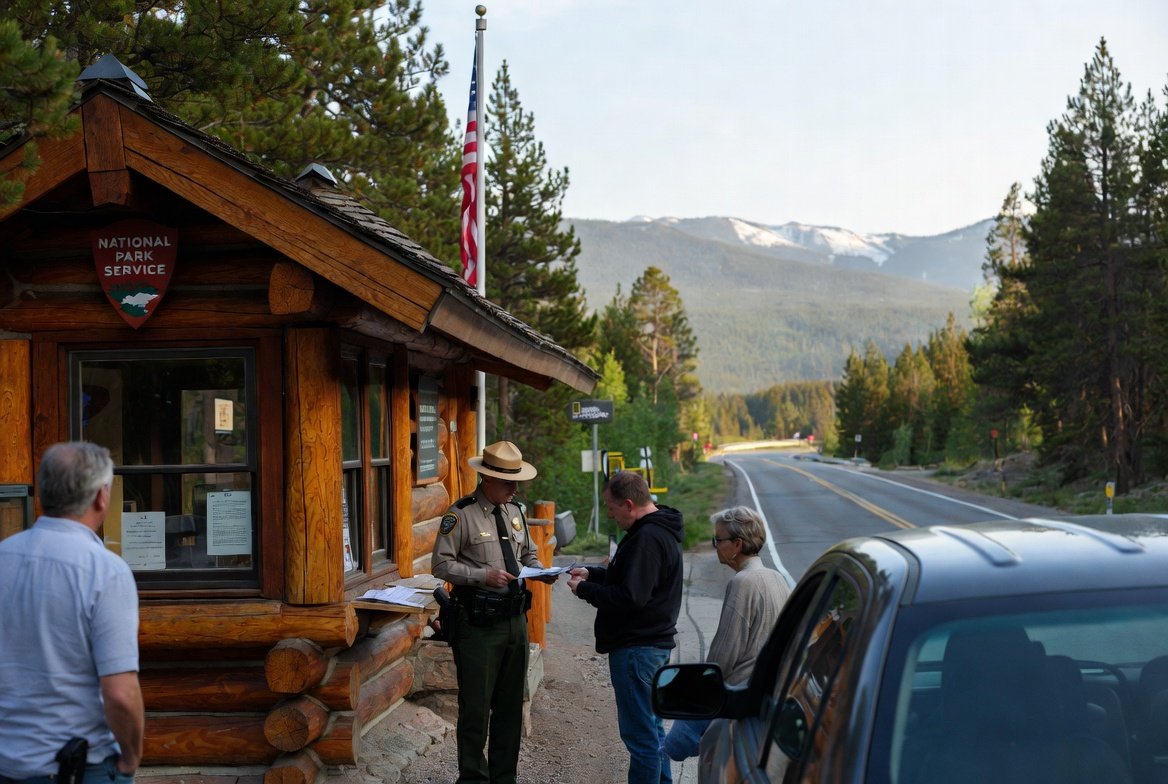
Do I have to come back to Wyoming for a park citation?
Usually not, and never without asking first. The federal rules let a misdemeanor case proceed without the defendant in the room when the defendant consents in writing and the court permits it. The answer is the court's to give, case by case, and the way to get it is to ask properly, early, through someone who appears there.
Call or text me. Clients get my cell number from day one, and I answer. Got a violation notice? Here's what happens next.
Read it in your language. Talk it through in your language.
Every page of this National Parks chapter is written in Chinese, Korean, Japanese, Spanish, French, German and Italian. The consultation is a video call with attorney Aaron Herzberg, carried in your language by live translation software, at no additional charge.

What the rules actually say.
For an offense punishable by no more than a year, "with the defendant's written consent, the court permits arraignment, plea, trial, and sentencing to occur by video teleconferencing or in the defendant's absence" (Fed. R. Crim. P. 43(b)(2)). Every park regulation falls inside that exception.
A petty offense may be tried on the violation notice itself, before a magistrate judge, without a jury (Fed. R. Crim. P. 58(b)). The District of Wyoming's local rule adds that anyone cited for a petty offense "must appear in Court at the place, date, and time for which they are given notice" unless collateral is paid.
The court's own description of the Yellowstone Justice Center says the courtroom "allows for the utilization of video conferencing and telephone conferencing capabilities for appearances, motion hearings and even settlement conferences." Whether a particular hearing is conducted by video is decided by the judge.
Handled from a distance.
The request to excuse a client's presence is made in writing, with the client's signed consent, at the time I enter my appearance. It goes to the court, and the Assistant U.S. Attorney is told at the same time that the case will be handled through counsel. From then on the government's file comes to me, the negotiation happens by telephone and e-mail, and the disposition is presented to the court on the hearing date.
- 01A case the government insists on trying, where credibility will be decided in the room
- 02A DUI or refusal case that began with an arrest, where a short custodial sentence is realistic and the court may want the defendant present at sentencing
- 03A case with a co-defendant, a victim, or restitution, where the court hears from more than one side
- 04Anyone the court has ordered to appear in person after a request to be excused was denied
For everyone else, the plan is one appearance through counsel, or one video appearance, and no travel.
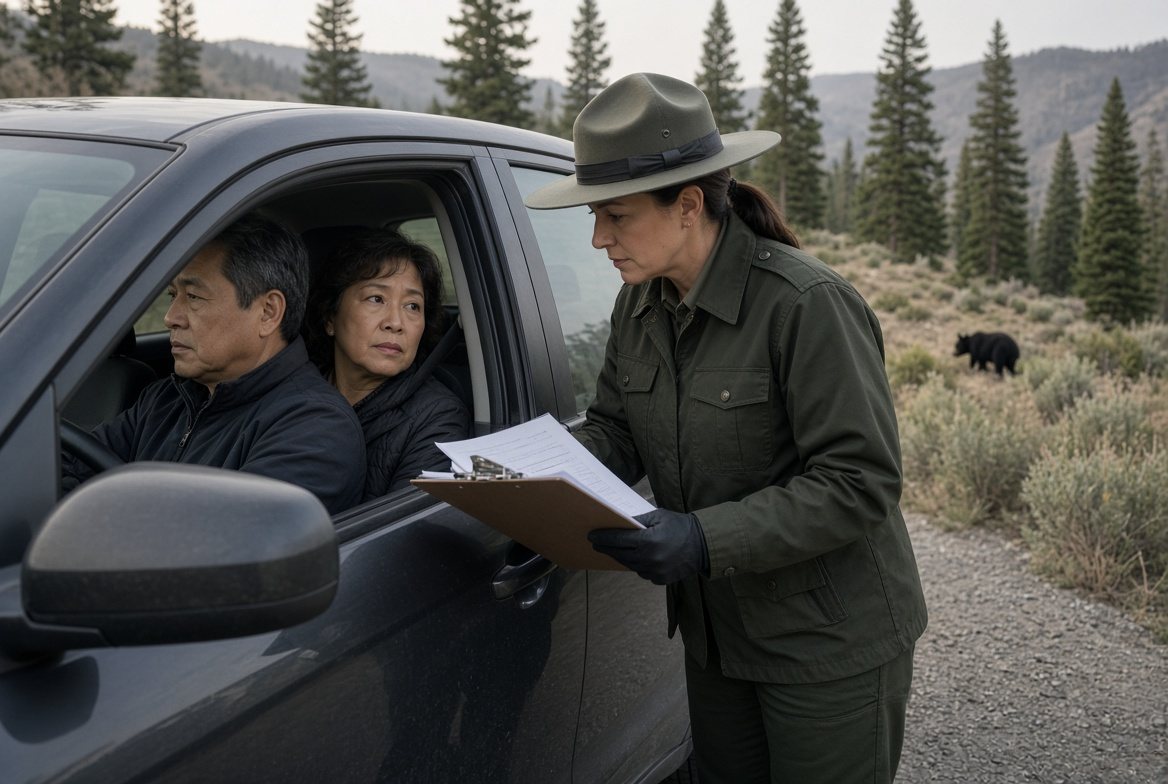
If you just do not go.
The rule in full, summons and warrant, the report to your state, the form to avoid
The rule in full
Rule 43 of the Federal Rules of Criminal Procedure requires a defendant to be present at the initial appearance, the plea, every stage of trial, and sentencing. It then carves out misdemeanors, and two things have to happen: your consent in writing, and the court's permission. Rule 58 governs these cases. Where a court has a collateral-forfeiture rule, as the federal court for the District of Wyoming does, it may accept a fixed payment in lieu of appearance and end the case.
The wrong answer
The Central Violations Bureau answers this question on its own site: if you fail to pay or to appear, the District Court may issue a summons ordering you to appear or a warrant for your arrest, and for a motor-vehicle violation the court may also report the failure to your state's licensing agency. Rule 58 says the same thing in procedural language: if a defendant neither pays nor appears, the clerk or the judge may issue a notice ordering an appearance on a date certain (Rule 58(d)). A federal bench warrant for a petty offense will not bring marshals to Ohio, but it does not expire either. It waits in the national databases for a traffic stop, a border crossing, a fingerprint-based background check, or a TSA secondary inspection, and then a $130 open-container notice becomes a custody problem in a state that is not Wyoming.
The other cost is bargaining position. A defendant who has ignored the notice is asking the court and the prosecutor for consideration from a bad position. A defendant who appeared through counsel before the deadline, asked properly to be excused, and proposed a resolution is asking from a good one. The dispositions that keep a record clean are available to the second person and rarely to the first.
One trip, not several
If the court prefers to hear from the defendant, a video appearance is arranged. If the court prefers an in-person appearance for a particular hearing, usually sentencing in a case that began with an arrest, I know that in advance and plan for one trip rather than several. The court sees out-of-state defendants every week; the rule that allows it was written for exactly this kind of case. What surprises people is that it has to be asked for, and that the person asking should be someone the court knows.
The form to avoid
The Yellowstone court publishes an Initial Appearance and Waiver of Counsel form that a cited person may complete and return by mail or e-mail, which is how some people handle a first appearance without a lawyer. I mention it because it exists, not because I recommend it: a form that waives counsel by mail is the opposite of what this page is about. The right form to send the court is the one that puts a lawyer in the case.
Asked from airports and kitchen tables.
Can my lawyer just go for me?
Does "appearance" mean I have to be there in person?
I live in another country. Is it different for me?
What if I already have a plane ticket and cannot make the date?
I was arrested, not cited. Do I have to come back for the rest of the case?
If I ignore the notice, will they really come after me for a speeding ticket?
Find your citation.
Every page below is written for one kind of notice. Start with the one that matches yours.
Start with a confidential conversation with Aaron Herzberg.
National-park matters begin with a thirty-minute call, and almost everything after that can be handled from wherever you are. Book it through the chat button in the corner of this page, or send the note here and my office will call you, usually the same business day. Have your violation notice in hand so we can read the box together, and call or text any time. Video consultations are available in Chinese, Korean, Japanese, Spanish, French, German and Italian, with live translation software, on request.
40 E Simpson Ave, Jackson, WY 83001 · by appointment · video consultations for out-of-state clients · info@puzzlegroup.com