Approaching, feeding, or disturbing wildlife in Yellowstone or Grand Teton.
Every summer someone walks up to a bison for a picture, hands a chipmunk a cracker, or stays put with a phone while a grizzly decides what to do about it. Two rules govern all of it, and which one the ranger writes decides whether the notice can be paid or must be answered in court.
Call or text me. Clients get my cell number from day one, and I answer. Got a violation notice? Here's what happens next.
Read it in your language. Talk it through in your language.
Every page of this National Parks chapter is written in Chinese, Korean, Japanese, Spanish, French, German and Italian. The consultation is a video call with attorney Aaron Herzberg, carried in your language by live translation software, at no additional charge.

The regulation, the closures, the verb.
The Park Service prohibits "the feeding, touching, teasing, frightening or intentional disturbing of wildlife nesting, breeding or other activities" (36 CFR § 2.2(a)(2)), and defines wildlife as any member of the animal kingdom except fish (36 CFR § 1.4).
The yardage is not in the regulation; it is in each superintendent's compendium, and violating it is charged as a closure violation (36 CFR § 1.5(f)). Both parks add a second test with no number in it: any distance that disturbs or displaces the animal is also too close.
The animal's response is the evidence: the elk that moved off, the bear that bluff-charged. The caption on the video, "got a little close," is read as an admission of the knowing element.
Thirty yards, or arm's length.
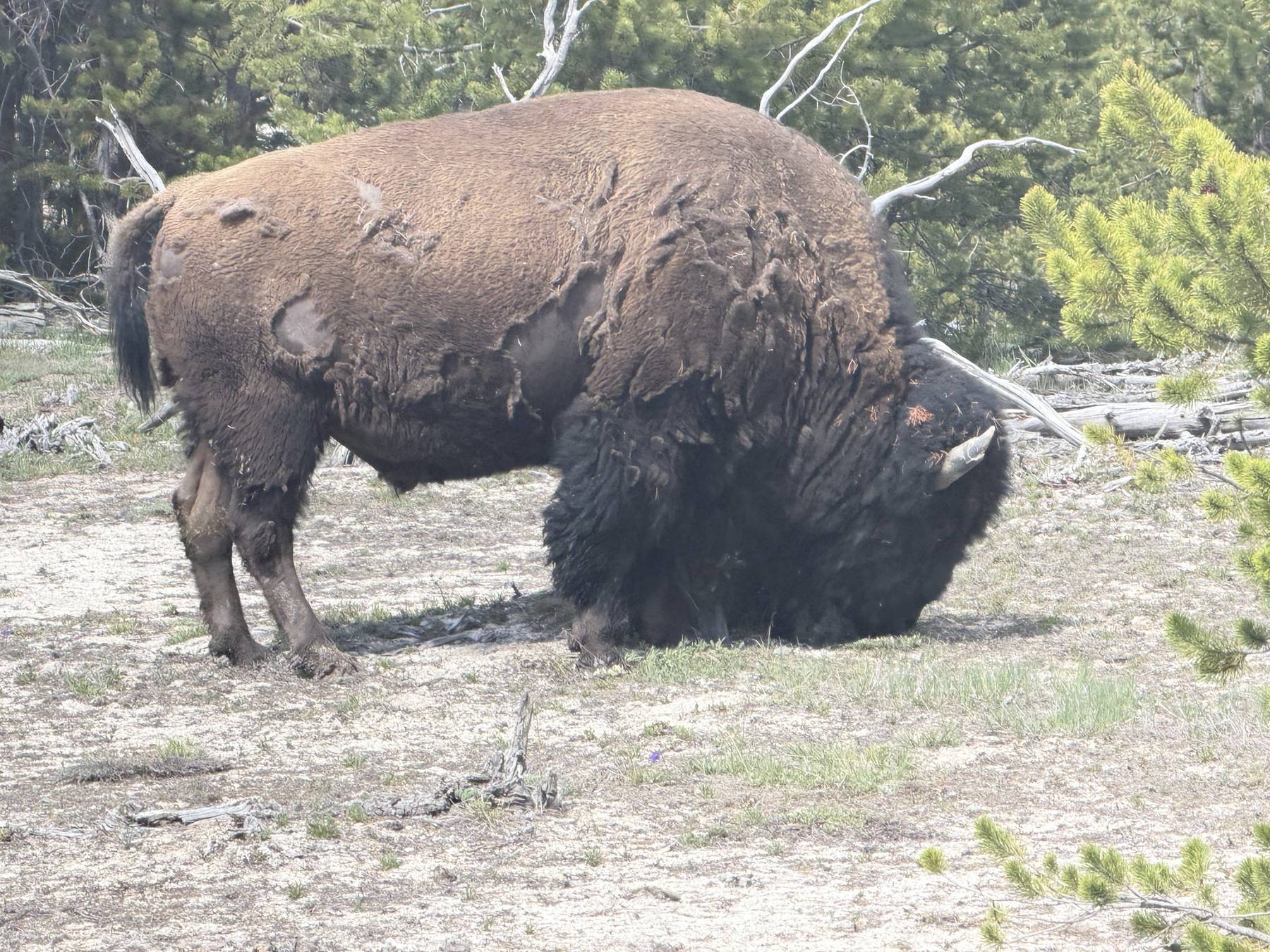
A telephoto frame from the shoulder of the road in Hayden Valley is not a case. A phone held at arm's length in front of a bull bison is a closure violation on its face, and if the animal turned, stepped, or lowered its head, the ranger has the reaction that makes it intentional disturbing under the regulation. A first-time case with no contact, no feeding, and no defiance is usually resolved without probation, which means without a ban.
- 01Pushed a bison calf onto the road, Lamar Valley, 2023: $500 fine, $500 to the wildlife fund, no probation
- 02Photographed a grizzly with cubs through a bluff charge, 2021: four days, one year of probation with a ban, $1,000 fine, $1,000 payment
- 03Kicked a bison while intoxicated and was hurt, 2024: ten days, $3,000, two years of probation with a ban
- 04Fed a black bear family in Grand Teton, 2018: two citations; the sow was killed
- 05Guided clients into wildlife and thermal violations, 2021: seven days after a bench trial, five years of probation
Drawn from the government's own announcements. Each involved contact, feeding, intoxication, or a charge on video. A visitor who got too close for a picture, touched nothing, and backed away when told is usually a fine, not a headline. Every case turns on its own facts.
The bison, the bear, and the ban.
The closures in full, the announced cases, feeding, bear jams, the injured visitor, probation and the ban
The closures in full
Yellowstone prohibits "knowingly approaching, remaining, viewing, or engaging in any activity" within twenty-five yards of any wildlife or one hundred yards of bears, wolves, and cougars, along with any distance that disturbs or displaces the animal, using a vehicle to approach it, ignoring staff directions during wildlife management, and failing to back off after a surprise encounter; Yellowstone's compendium also closes Hayden Valley to off-trail travel from mid-July to mid-September for bear management. Grand Teton's January 2026 compendium prohibits "willfully approaching, remaining, viewing, or engaging in any activity" within one hundred yards of bears or wolves or twenty-five yards of any other wildlife, nesting birds included.
A closure violation is $100 on the collateral schedule, which means Box B and the option of paying by mail, with the record consequences that paying carries. The regulation is Box A: feeding, touching, teasing, frightening, or intentionally disturbing wildlife is a mandatory appearance, and so is possessing, injuring, or disturbing wildlife under the resource-protection rule (36 CFR § 2.1(a)(1)(i)). Rangers frequently write both, as they did in the grizzly and bison cases below. The same section allows hunting only where a federal statute mandates or authorizes it, which is why Grand Teton runs an elk reduction program under its 1950 enabling act and Yellowstone has none. Drones, which Yellowstone bans partly because they disturb wildlife, are a separate closure.
The bison cases
In May 2023 a visitor in Lamar Valley pushed a newborn bison calf up from the river onto the road; the herd rejected it and the park euthanized it. He pleaded guilty to disturbing wildlife and was fined $500 with a $500 payment to the park's wildlife fund, and the government's own announcement noted that nothing in the report showed he acted maliciously. In April 2024 a man who had been drinking approached a herd near Seven Mile Bridge, kicked a bison in the leg, and was injured by it; in September he was sentenced at Mammoth to ten days in custody, a $3,000 fine on the wildlife count, and two years of probation with a ban from Yellowstone. The distance between those two sentences is the distance between a mistake and a kick.
The bear and elk cases
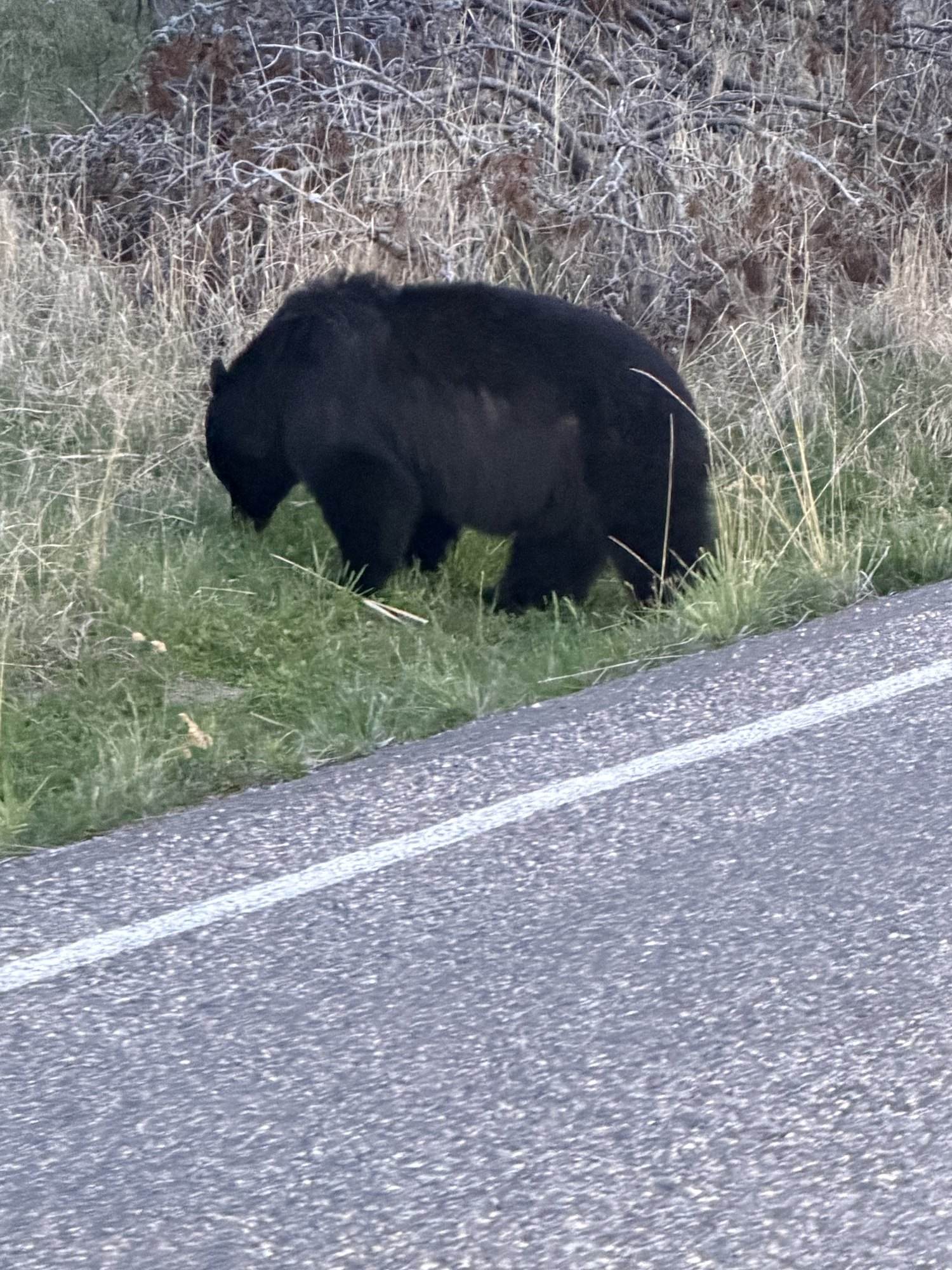
In 2021 a visitor at Roaring Mountain stayed and photographed a grizzly sow with three cubs while everyone else went back to their cars, and kept filming through the bluff charge. She pleaded guilty to remaining within one hundred yards; the feeding-and-disturbing count was dismissed; the sentence was four days in custody, a year of probation with a ban, a $1,000 fine, and a $1,000 payment. In Grand Teton in 2018 two visitors fed fruit to a black bear sow and her cubs along Signal Mountain Road; the sow was euthanized and both were cited. Elk produce a different case: Yellowstone closes the Mammoth parade grounds to all foot travel during calving, because cow elk have injured people there, and walking through the closure is charged even if no elk was seen.
The person the bison hurt can still be the defendant
Bison have injured more people in Yellowstone than any other animal, and the visitor carried out of Hayden Valley or Lake Village in an ambulance is not, in the government's eyes, the victim of the encounter. The regulation asks what the person did to the animal, and a goring is proof that the distance was closed. What the injured visitor said to the medic, the ranger, and the family member on the phone becomes the report, and the report becomes the case. If you were hurt, get well, keep the medical records, and let the account of how it started come from me rather than from a hospital bed.
Intoxication changes the case more than the injury does. Being in the park under the influence to a degree that endangers yourself or others is its own charge, and in the 2024 bison case it added a count and a $200 fine on top of the ten days. A visitor who drank at the lodge and then walked toward an elk in the Mammoth parking lot has two problems, and the open-container and intoxication page covers the second one.
Feeding, bear jams, and the ranger's directions
Feeding is the one wildlife offense with no distance in it and no argument about intent: the food left the hand. The regulation covers a ground squirrel at a Grand Teton picnic area and a bear at a Yellowstone campground with the same words, and both are a mandatory appearance. A bear that takes food from a person is often killed, which is why the park announces feeding cases and why the government treats a fed bear as a resource loss rather than a lapse of manners. Unsecured food in a campsite is a different regulation; hand-feeding is this one.
Grand Teton's bear jams on the Moose–Wilson Road and around Jackson Lake are managed by the park's Wildlife Brigade, a bear biologist, wildlife rangers, and volunteers who set the line and direct traffic. Yellowstone's closure makes failing to comply with directions from staff carrying out the park's wildlife protocols a violation in itself, and the general regulation makes violating a lawful order during a wildlife management operation involving a dangerous animal its own offense (36 CFR § 2.32(a)(2)). A citation at a jam is about the line the staff drew, and the report will say how many times you were told. Stopping in the travel lane to look is a separate traffic count, obstructing traffic (36 CFR § 4.13(a)), and a wildlife jam is not an exception the regulation recognizes.
Probation, and the condition that keeps you out of the park
In wildlife cases the term that follows people home is the condition of probation that bars them from the park, not the fine. Probation for a misdemeanor can run as long as five years, and among the conditions a court may attach is one that the defendant stay away from specified kinds of places (18 U.S.C. § 3563(b)(6)), which in these cases means the park. In the announced wildlife cases the term was one year for the grizzly photographer and two for the man who kicked the bison, in each case coextensive with probation. A ban can also arrive before any conviction, as a condition of release while a case is pending, and it can cover both parks. For a visitor from Ohio, a two-year ban is an inconvenience; for someone who lives in Jackson and drives through Grand Teton to work, or guides in it, it is the case.
Where the facts make probation likely, the length of the ban, which park it covers, and whether an exception is written for a commute or a job are the terms that get negotiated. Whether you must return to Wyoming for any of this is answered on the page on coming back, and what a conviction means for a background check or a visa on the page on records; the thermal-area page covers the boardwalk cases that so often share a docket with these.
Asked about bison, elk, and bear citations.
How close is too close, exactly?
The bison walked up to me. Is that still a violation?
I was the one who got hurt. Am I really the one being charged?
Can I pay a wildlife ticket by mail?
Is feeding a chipmunk at a picnic table really the same as feeding a bear?
Will I be banned from the park?
Find your citation.
Every page below is written for one kind of notice. Start with the one that matches yours.
Start with a confidential conversation with Aaron Herzberg.
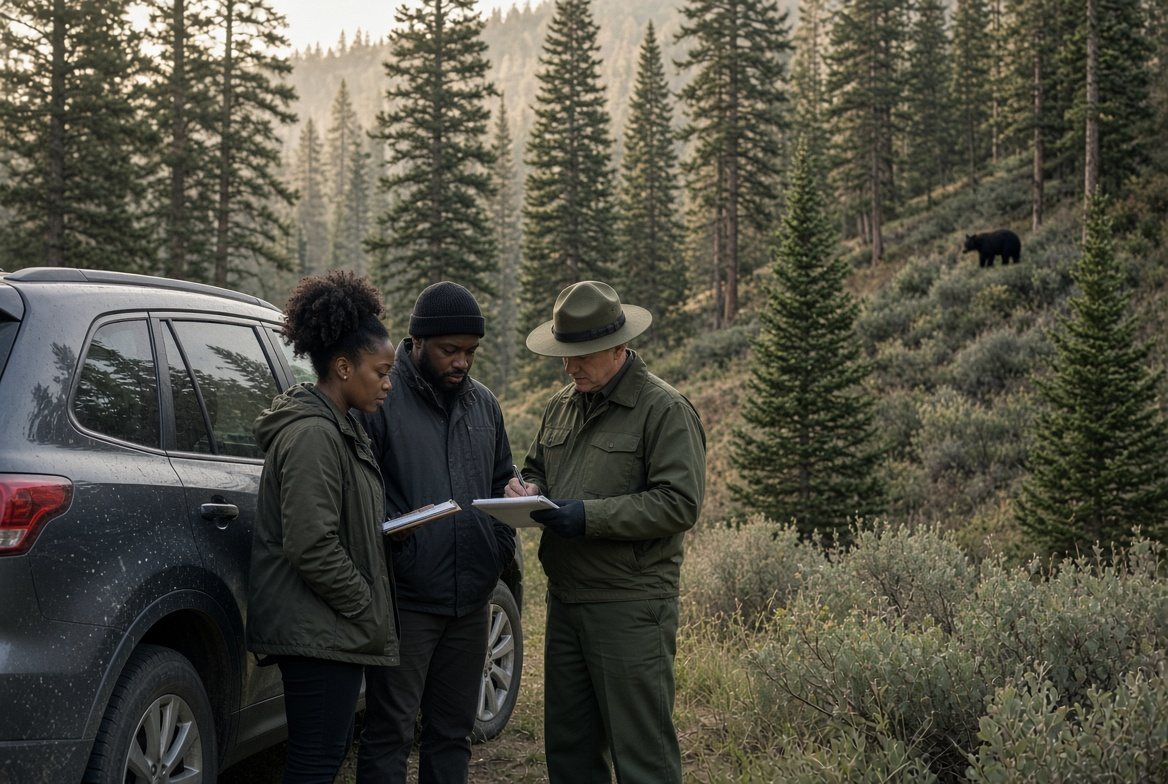
National-park matters begin with a thirty-minute call, and almost everything after that can be handled from wherever you are. Book it through the chat button in the corner of this page, or send the note here and my office will call you, usually the same business day. Have your violation notice in hand so we can read the box together, and call or text any time. Video consultations are available in Chinese, Korean, Japanese, Spanish, French, German and Italian, with live translation software, on request.
40 E Simpson Ave, Jackson, WY 83001 · by appointment · video consultations for out-of-state clients · info@puzzlegroup.com